

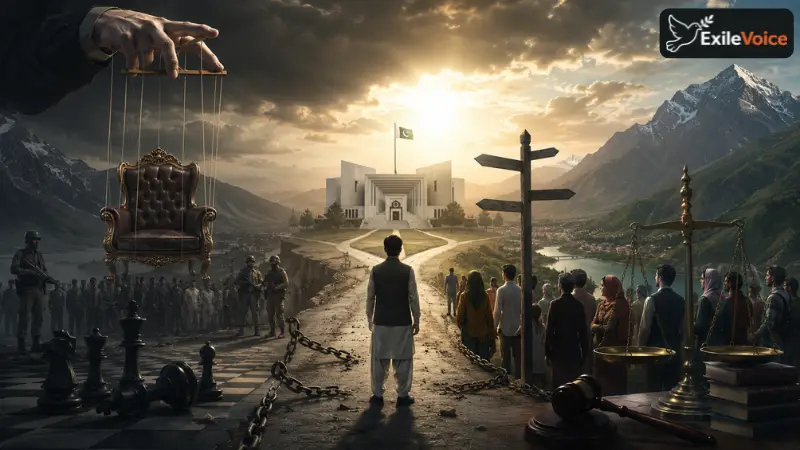
The challenges currently facing Pakistan, ranging from security issues in Balochistan and Gilgit-Baltistan to the broader political climate, are inextricably linked to historical patterns of governance and the role of institutional oversight. Throughout the nation’s history, various regimes have prioritized centralization and personal control over established democratic processes and systemic checks and balances. This legacy of institutional imbalance, where decision-making power is often concentrated in the hands of a few rather than shared across institutional frameworks, has frequently led to severe political and national crises.
Historical precedents illustrate the dangers of circumventing these checks. During the tenures of previous leaders, the erosion of constitutional norms and the centralization of power led to significant consequences, including the detachment of national institutions from the democratic aspirations of the people. Whether it was the suppression of popular political leaders, the manipulation of electoral processes, or the handling of sensitive regional issues, the lack of internal dissent or oversight within state institutions allowed for policies that ultimately weakened the state's structural integrity.
Today, the debate surrounding the status of regions like Gilgit-Baltistan and the ongoing political instability highlight a recurring tension: the disconnect between state-level decision-making and public sentiment. When major national decisions, such as changing the constitutional status of a region or managing sensitive peace negotiations, are made without inclusive, transparent, and broad-based political consensus, they risk being perceived as exclusionary or illegitimate. This not only weakens the state’s position domestically but also complicates its capacity to handle complex geopolitical realities.
The need for robust, internal accountability mechanisms has never been more pressing. An institutional culture that encourages professional dissent, adherence to constitutional mandates, and public transparency is essential for preventing the repetition of historical mistakes. True strength, in the context of a modern state, is not found in the concentration of authority but in the ability of institutions to remain accountable to the public they serve. As Pakistan faces these crossroads, the shift toward a more transparent, constitutionally grounded governance model is not merely a political preference; it is a necessity for the country's long-term stability and cohesive development.

