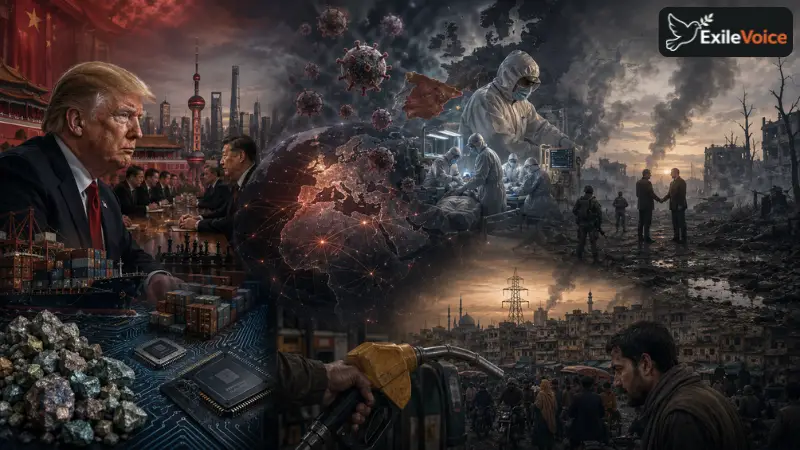
The international landscape is currently navigating a dual crisis of shifting geopolitical alliances and emerging public health threats. A major point of focus is the high-stakes summit involving former U.S. President Donald Trump and the Chinese leadership. This visit is expected to have far-reaching implications for global trade, specifically regarding AI semiconductor chips, rare earth minerals, and trade tariffs. The "Cold War" dynamic between the U.S. and China has long dictated global economic trends, and a shift toward either intensified competition or strategic business cooperation could redefine the financial markets for the next decade.
While the diplomatic world watches Beijing, the scientific community is raising alarms over the spread of the Hanta-virus. Recently detected as far as Spain, the virus has prompted the World Health Organization (WHO) to issue advisories. Unlike COVID-19, the Hanta-virus primarily affects the respiratory system and can lead to severe kidney failure. While health experts suggest it may not possess the same pandemic potential as the coronavirus in terms of transmission, its high mortality rate and rapid spread across Europe have caused significant anxiety. The convergence of these health concerns with global political instability creates a volatile environment for international travel and trade.
Simultaneously, the temporary ceasefire between Russia and Ukraine offers a rare glimmer of hope for European stability. If sustained, this pause in hostilities could reduce the immense pressure on European energy markets and potentially shift the focus of Western diplomacy toward other regions, such as Iran. However, the internal pressures within the U.S., particularly the influence of leaders like Trump, continue to play a wildcard role.
For Pakistan, these global shifts are coupled with internal economic distress. The recent hike in petrol and diesel prices by 15 rupees per liter is a direct consequence of both global energy fluctuations and internal governance challenges. As the world navigates the complexities of new viruses and changing political orders, the necessity for robust, transparent, and proactive leadership becomes more apparent. Navigating this "new nightmare" of health risks and economic volatility requires not just local resilience but a deep understanding of the interconnected nature of modern global events.