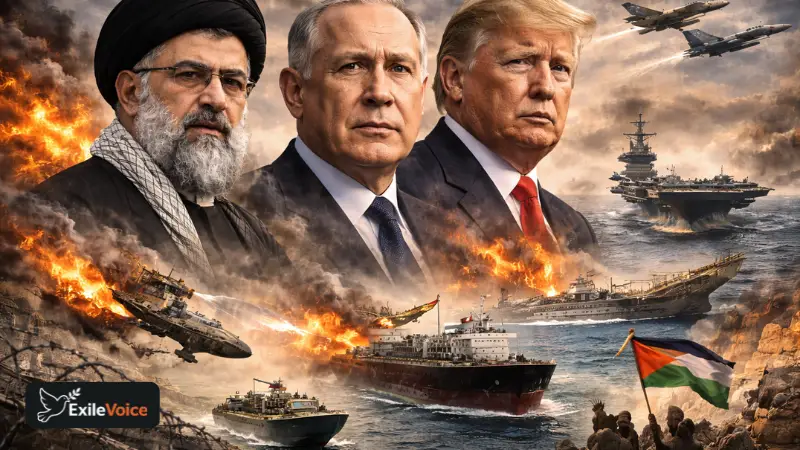
The Middle East is currently witnessing an unprecedented escalation in hostilities as the conflict involving Iran, Israel, and the United States intensifies. This week, regional dynamics reached a critical boiling point following the first written statement from Iran's new Supreme Leader, Mojtaba Khamenei. In his address, Khamenei emphasized national unity and reinforced the ongoing blockade of the Strait of Hormuz, a move that has immediate and severe implications for global energy markets and maritime security.
The response from the opposing front was swift and uncompromising. Israeli Prime Minister Benjamin Netanyahu, making his first public video appearance in days to dispel rumors regarding his health and location, asserted that the war would only conclude once Israel’s strategic objectives are met. He explicitly refused to guarantee the safety of the new Iranian leadership, a sentiment echoed by U.S. President Donald Trump. This rhetorical exchange indicates a move away from diplomatic de-escalation toward a strategy of high-stakes military confrontation.
On the tactical front, a major development occurred involving a U.S. KC-135 Stratotanker. The aircraft, designed for mid-air refueling of fighter jets,an essential capability for long-range strikes against targets like Tehran has been reported missing. While Iraqi groups associated with Iran have claimed responsibility for Downing the aircraft, the United States has yet to confirm these claims, stating only that the plane and its six crew members are currently unaccounted for. This incident follows a series of losses for the U.S. military in the region, including F-18 and F-15 aircraft and MQ-9 drones.
The humanitarian and legal ramifications of the conflict are also coming to the forefront. Oman’s Foreign Minister recently issued a strong statement, clarifying that Oman will not participate in the "Board of Peace" or establish ties with Israel, viewing the current military campaign as an attempt to prevent the establishment of a Palestinian state. Simultaneously, the International Court of Justice (ICJ) continues to see movement as nations like the Netherlands and Iceland join the genocide case against Israel. These developments underscore the growing international pressure and the complex web of alliances currently shaping the most volatile region in the world.