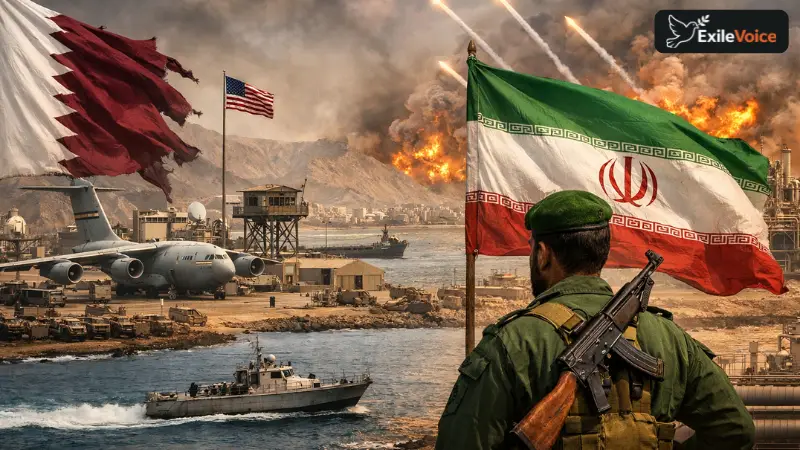
The Middle Eastern geopolitical landscape is undergoing a seismic shift as Qatar officially announces its dissociation from the ongoing regional conflict. This development marks a significant turning point, particularly in favor of Iran, which appears to be negotiating from a position of renewed strength. For decades, Qatar has maintained a delicate balancing act, hosting major U.S. military installations while keeping diplomatic channels open with regional adversaries. However, the recent announcement suggests a strategic retreat from this mediation role, citing the rapid escalation of hostilities as a primary driver for its neutrality.
Observers note that Iran’s response to U.S. peace proposals indicates a high level of confidence. Tehran recently rejected a fifteen point proposal facilitated through international intermediaries, replacing it with a stringent five point list of demands. These demands include the complete cessation of military operations across the region, the withdrawal of U.S. bases from Middle Eastern soil, and full financial compensation for damages incurred during recent bombardments. Furthermore, Iran has asserted its sovereign right over the Strait of Hormuz, demanding global recognition of its authority to collect transit fees and manage maritime traffic.
The economic dimension of this conflict reveals why Iran feels emboldened. Despite heavy infrastructure damage and loss of life, the mathematical realities of the global oil market favor Tehran in a protracted engagement. Prior to the escalation, Iran produced approximately 1.2 million barrels of oil per day, selling to China at significant discounts due to sanctions. In the current climate, production has surged to nearly 2 million barrels per day, with prices hovering above $100 per barrel. This influx of capital provides Iran with the "economic oxygen" necessary to sustain its military operations and resist diplomatic pressure that would otherwise cripple a smaller economy.
In contrast, neighboring Gulf states such as the UAE and Qatar face different stakes. Their economies, heavily reliant on tourism, aviation, and a stable petro-chemical infrastructure, are less suited for a multi-year conflict. The reported escalation of Israeli strikes, with over 15,000 bombs allegedly dropped on Iranian targets, and the subsequent Iranian threats against "neighboring countries" assisting the U.S. has put regional players on high alert. Iran’s warning that any territory used to launch attacks against its islands will become a legitimate target has specifically cast a shadow over the UAE, given its close ties with Israel and the U.S. military.
As the 48-hour ultimatum issued by Prime Minister Netanyahu looms, the region stands at a crossroads. Whether the U.S. will commit "boots on the ground" or if a diplomatic breakthrough can be achieved remains the central question of the hour.