While the public discourse surrounding the U.S.-Iran conflict often focuses on nuclear capabilities and maritime blockades, the underlying battle is one of financial hegemony. The recent negotiations in Islamabad highlighted Iran’s desperate need to reconnect with the global financial system, a goal currently blocked by the "comprehensive dollar domination" exercised by the United States. This financial leverage is arguably a more potent weapon than the naval assets deployed in the Persian Gulf.
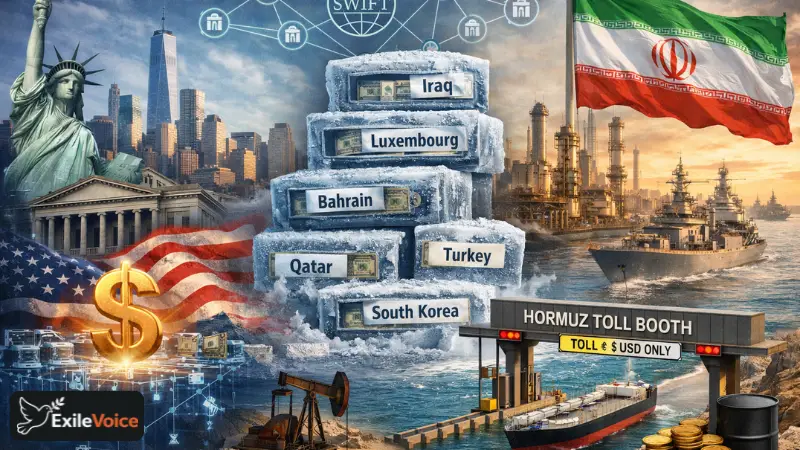
The "New York Banking Chokepoint" remains the ultimate hurdle for Iran. Because almost all international trade is denominated in U.S. dollars and cleared through New York-based financial institutions, the U.S. Treasury has the power to effectively paralyze the economy of any nation it targets. This is evidenced by the $27 billion in Iranian oil revenue currently frozen in banks across Iraq, Luxembourg, Bahrain, Qatar, Turkey, and South Korea. These funds are not being held because of a lack of goodwill from these nations, but because the Swift messaging system and dollar-clearing mechanisms are under the direct oversight of the U.S. government.
This financial stranglehold is a legacy of the 1971 decision to move away from the gold standard. In the era of the gold standard, nations could trade in precious metals, making secondary sanctions difficult to enforce. However, in the current petro-dollar system, the U.S. can monitor and halt any transaction it deems a violation of its policies. This reality has driven the "BRICS" nations (Brazil, Russia, India, China, and South Africa) to pursue alternative payment systems. However, despite their efforts, they have yet to develop a mathematically and scientifically viable alternative that can compete with the depth and liquidity of the U.S. dollar.
Intriguingly, some analysts have proposed a novel solution to the Strait of Hormuz crisis: the "Hormuz Toll Booth." This theory suggests that if Iran were to nationalize the Strait, similar to Egypt’s nationalization of the Suez Canal—and collect transit tolls in U.S. dollars rather than local currencies or the Chinese Yuan, it might fulfill a critical U.S. requirement for dollar supremacy. Such a compromise could provide Iran with a steady stream of revenue while allowing the U.S. to maintain the global dominance of its currency. As the conflict enters a new phase of uncertainty, the evolution of these financial and economic "toll booths" will likely determine the longevity of any potential peace in the region.