While official statements from Pakistan’s current administration often paint a picture of a nation on an upward trajectory, a comparative analysis of key economic indicators reveals a starkly different reality. The transition from the previous administration to the current "Form 47" military-backed governance has seen a significant decline in nearly every vital economic metric, raising concerns about the sustainability of the current fiscal model.
The most telling statistic is the plummeting GDP growth, which has fallen from a robust 6% during the previous tenure to a mere 2%. This contraction is accompanied by a stagnation in exports, dropping from $31.3 billion to roughly $30 billion. For a country desperate for foreign exchange, this decline in export performance is a critical blow to its economic sovereignty.
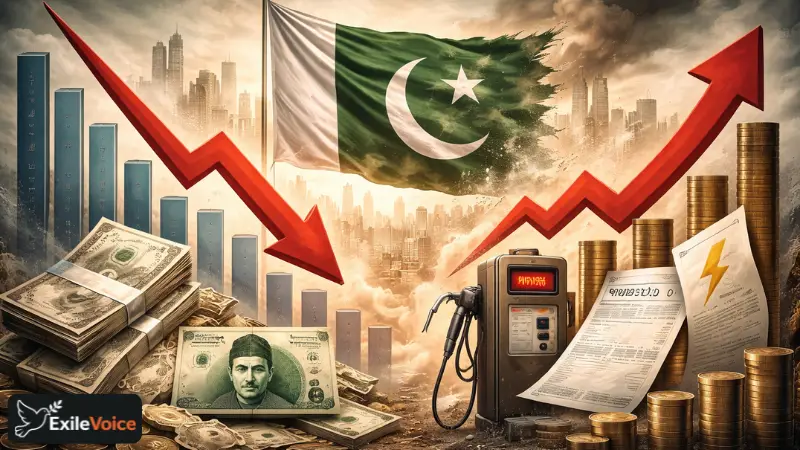
Furthermore, the burden on the average citizen has increased exponentially. Electricity prices have surged from 17 PKR per unit to an staggering 50 PKR per unit, while petrol prices have more than doubled. These increases, coupled with a tax collection target that has jumped from 7 trillion to 14 trillion PKR, indicate that the government is aggressively extracting wealth from a shrinking economic base to service mounting debts. The national debt has ballooned from 51 trillion to 81 trillion PKR, showcasing a reliance on borrowing that far outpaces revenue generation.
The devaluation of the currency, moving from 176 to 280 PKR against the dollar, has further eroded purchasing power and fueled inflation. Despite claims of "efficiency" and "progress" by the current leadership, the data suggests that the structural health of the economy is in a state of rapid decline. Without significant reforms that move beyond mere tax hikes and borrowing, the gap between official narratives and the lived experience of the Pakistani public will continue to widen.