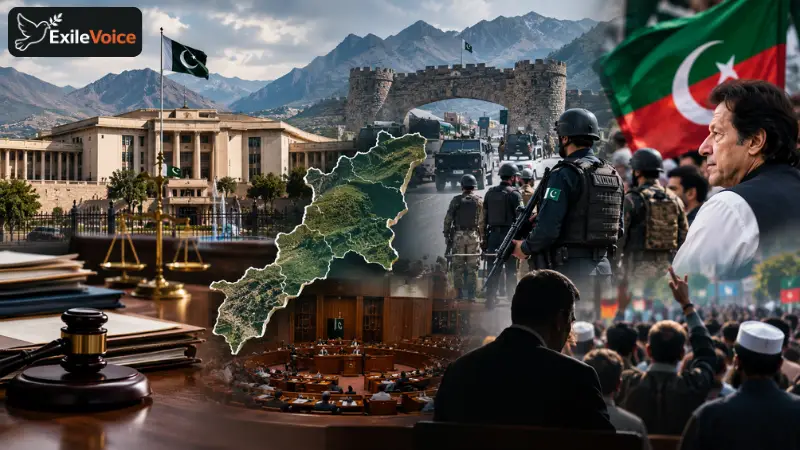
Political volatility in Pakistan has intensified as opposition leaders finalize the logistics for an upcoming long march, sparking sharp debate across the national political landscape. Current developments reveal both state-directed countermeasures and internal party friction regarding the strategic trajectory of public demonstrations and political engagement.
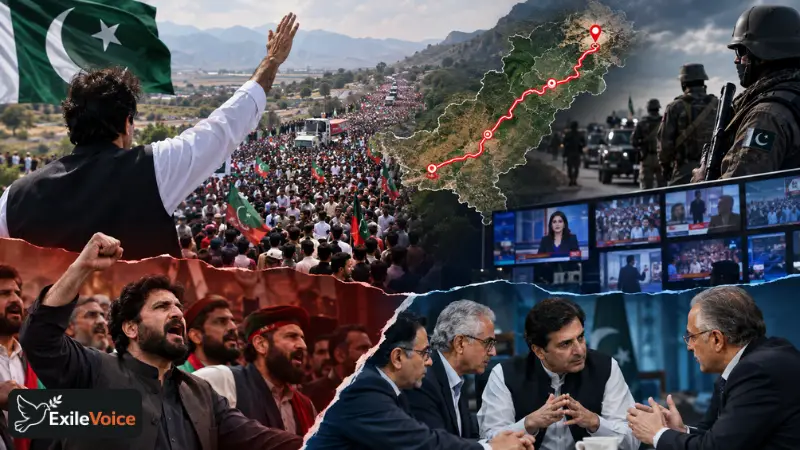
Organizers have officially outlined the trajectory for the forthcoming protest movement, designating Laki Marwat's Gandi Chowk as the primary launch point. The planned march is scheduled to traverse key regional corridors over several days, culminating in Peshawar. Public response to the mobilization effort has manifested through grass-roots fundraising drives, raising significant financial contributions within a short window. Reports indicate widespread participation from diverse socio-economic groups, with local supporters contributing personal funds to sustain logistical operations.
The movement's core leadership emphasizes that public support remains robust despite administrative hurdles and media blackouts. Organizers maintain that the long march represents a constitutional mechanism to assert democratic mandates and challenge current governance arrangements.
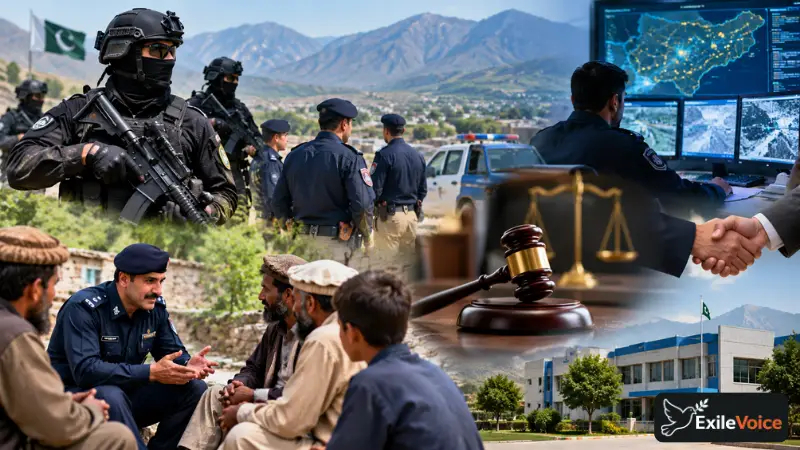
In response to the announced march, administrative and security apparatuses have signaled a zero-tolerance policy toward potential civil disruption. Statements issued following institutional briefings reflect strong warnings against actions deemed threatening to public order or state facilities.
Concurrently, a coordinated narrative across select media channels has attempted to frame the incoming marchers as potential security risks. Analysts note that mainstream media coverage has drawn contentious historical comparisons, accusing organizers of fostering regional divisions. Critics argue that such rhetoric risks exacerbating tensions between central authorities and provincial populations, particularly within Khyber Pakhtunkhwa.
Beyond external state pressure, internal deliberations within the primary opposition party highlight diverging strategies on how to navigate the current political crisis:
Led by regional organizers and grassroots activists, this group advocates for direct public action, street power, and uncompromising demands regarding constitutional rights and electoral integrity.
Represented by senior parliamentarians and moderate voices, this grouping favors continuous dialogue with state institutions and ruling coalitions. Proponents of this approach argue that flexible negotiation is essential to avoid direct confrontation and secure institutional relief.
The ongoing debate reflects a fundamental dilemma facing the opposition: balancing popular agitation with political pragmatism in an increasingly restrictive environment.