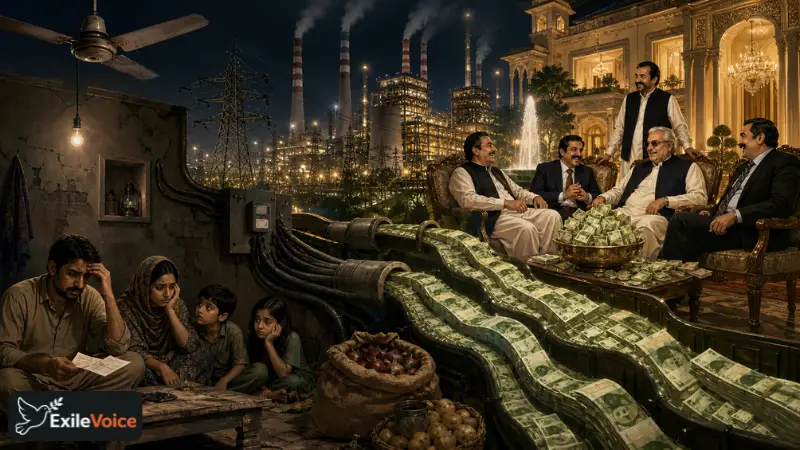
While the general public in Pakistan struggles with the rising costs of basic utilities, a closer look at the power sector reveals a staggering disparity in how resources are allocated. Recent reports have brought to light the massive "capacity payments" being made to Independent Power Producers (IPPs), some of which are owned by prominent political families.
A specific case involves the Chiniot Power Limited project, which was established during the 2014 era. Records suggest that the total cost of the project was approximately 62 million USD (around 6 billion PKR at the time). However, since its inception, the project has reportedly received over 7 billion PKR in capacity charges alone. Capacity charges are payments made by the government to power plants to ensure they are available to produce electricity, regardless of whether that electricity is actually generated or consumed.
This model has placed an unbearable burden on the national exchequer and, by extension, the taxpayer. While the government considers increasing the petroleum levy by another 29 rupees to meet fiscal targets, the outflow of billions to politically connected IPPs continues unabated. Critics argue that this represents a form of "legalized extraction," where the state guarantees profits for the elite while slashing budgets for public health and education.
Professional analysis suggests that without a complete overhaul of the power purchase agreements (PPAs), Pakistan’s circular debt will continue to spiral. The current strategy of passing these costs onto the consumer through "fuel adjustment charges" and increased taxes is unsustainable. It leads to a cycle of poverty where the working class pays for the "capacity" of plants they do not benefit from.
The political optics are equally damaging. When the families of high-ranking officials are seen as beneficiaries of these state-guaranteed payments, public trust in economic reforms evaporates. For a meaningful recovery, the government must prioritize transparency in the energy sector and renegotiate lopsided contracts that favor private interests over the public good.