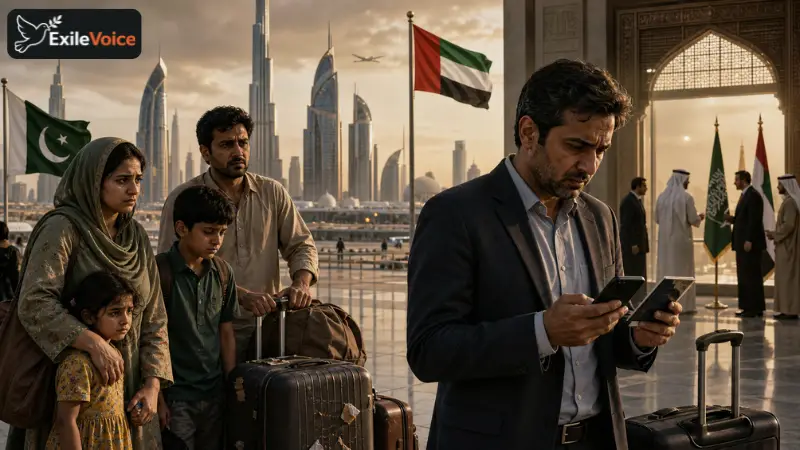
The United Arab Emirates (UAE), long considered a safe haven and a primary economic engine for the Pakistani middle class, is reportedly undergoing a significant policy shift that has left thousands of Pakistani families in a state of uncertainty. Reports indicate a systematic "purge" involving the freezing of bank accounts, the cancellation of visas, and the deportation of Pakistani professionals who have spent decades contributing to the Gulf state's economy.
This development is not merely an administrative or labor issue; it is a manifestation of shifting geopolitical alignments. Historically, Pakistan and the UAE shared a "brotherly" relationship based on shared security interests and financial support. However, as the UAE diversifies its strategic partnerships, most notably through the Abraham Accords with Israel and deepening defense ties with India, the old "special relationship" with Pakistan is being re-evaluated through a lens of pragmatism and "punitive diplomacy."
Analysts suggest that the UAE is using economic levers to signal its displeasure with Pakistan's perceived neutrality or lack of cooperation in regional conflicts. The demand for the immediate repayment of multi-billion dollar loans earlier this year was the first warning shot. The subsequent targeting of the Pakistani diaspora, including high-level professionals in state-owned enterprises like Etihad Airways, suggests that the UAE is no longer willing to provide unconditional support to a state it views as increasingly unstable or unreliable.
The impact of this shift is devastating for the Pakistani economy, which relies heavily on remittances from the Gulf. Beyond the macroeconomics, there is a profound human cost. Families who have built lives in Dubai and Abu Dhabi are being forced back to a country struggling with hyperinflation and political turmoil. Furthermore, the "Dubai Leaks," which revealed massive property holdings by Pakistani elites in the UAE, have created a domestic backlash, as the common man suffers from deportations while the powerful continue to shelter their wealth abroad.
This situation serves as a stark reminder of the vulnerability of Pakistan’s "rentier state" model. For decades, the country has relied on the export of labor and the import of strategic rents from the Gulf. As the UAE moves toward a future defined by high-tech defense partnerships and regional integration that includes Pakistan’s rivals, the old model is collapsing. Pakistan now faces the daunting task of renegotiating its place in a Middle East that is rapidly moving on without it.