

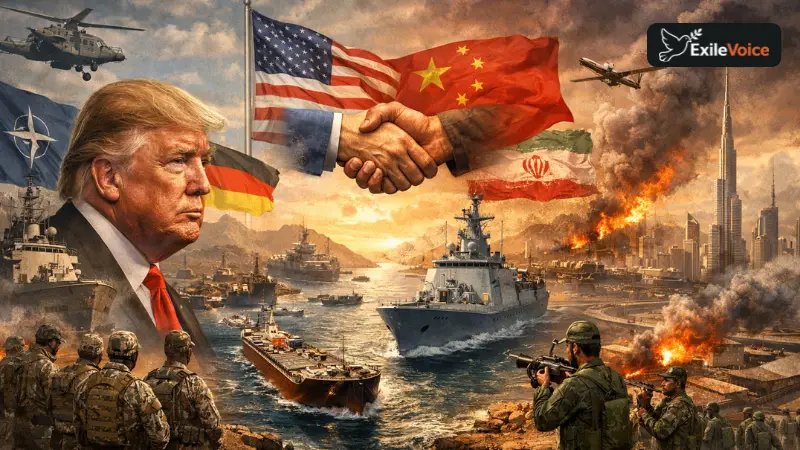
The global geopolitical landscape is currently undergoing a seismic shift as President Donald Trump intensifies his rhetoric regarding international alliances and maritime security. Central to this evolving narrative is the Strait of Hormuz, a vital chokepoint for global oil supplies, and the increasingly fraught relationship between the United States and its NATO allies. Reports indicate that key European powers, notably Germany and the United Kingdom, have recently shown a marked reluctance to provide the level of military or strategic support that the Trump-led movement deems necessary for regional stability.
This hesitation from traditional allies has prompted a surprising strategic pivot from Trump. In a move that has sent ripples through diplomatic circles, Trump has reportedly turned his attention toward China, seeking their assistance in "opening" or securing the Strait of Hormuz. This request marks a significant departure from standard American foreign policy, which has historically viewed China as a primary strategic competitor rather than a partner in Middle Eastern maritime security. The move suggests a growing realization within certain U.S. political circles that the traditional transatlantic alliance may no longer be the reliable bedrock it once was, especially under the strain of potential conflict with Iran.
The situation is further complicated by Iran’s increasing military assertiveness. Recent reports highlight significant attacks linked to Iranian interests, including drone strikes that have targeted strategic infrastructure in Saudi Arabia and even near major transport hubs like Dubai International Airport. These escalations are not merely regional skirmishes; they represent a sophisticated "war of nerves" designed to test the resolve of the international community and the efficacy of Western-led security umbrellas.
As Trump continues to warn that NATO faces a "very bad future" if its members fail to support U.S. objectives in the Middle East, the global community is left to contemplate a new world order. One where unconventional alliances might be sought to manage traditional flashpoints, and where the security of the world’s most critical energy lanes depends on a fragile and unpredictable balance of power.

