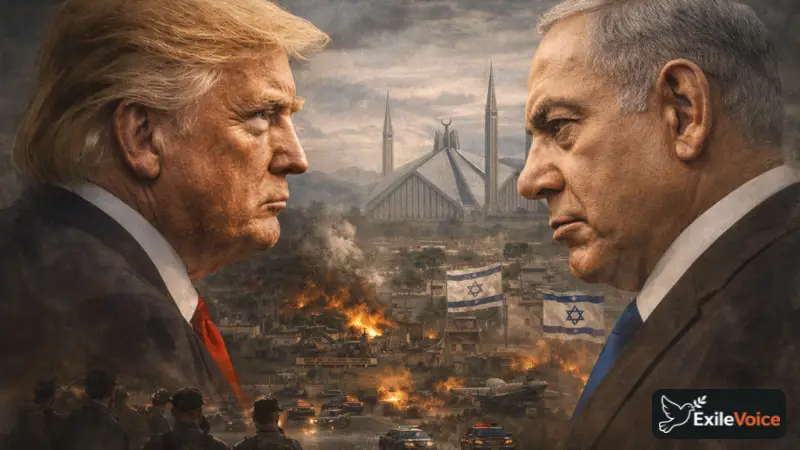
As the peace talks in Islamabad gain momentum, a significant shift is occurring in the traditional alliance between the United States and Israel. Recent reports indicate that the relationship between President Donald Trump and Prime Minister Benjamin Netanyahu has reached a point of unprecedented friction. For weeks, the two leaders appeared to be in lockstep regarding military operations in the Middle East. However, as Trump pivots toward a "Peace Dealer" persona to secure his domestic political standing before mid-term elections, Netanyahu’s continued military campaign in Lebanon has become a strategic liability.
The friction stems from divergent long-term goals. While Trump is focused on reopening the Strait of Hormuz, reducing fuel costs, and ending the humanitarian crisis to appease his domestic base, the Israeli leadership remains committed to the total degradation of Hezbollah and Iranian influence. This "tu-tu-main-main" (bickering) has become public, with Trump reportedly pressuring Netanyahu to "wrap up" the military campaign. The divergence has created a vacuum in which mediators like Pakistan have found room to operate, essentially offering an alternative path to regional stability that does not rely solely on Israeli military objectives.
Pakistan’s role in this rift has been subtle but effective. By providing intelligence and warnings about potential targets within the Iranian leadership, Islamabad has helped restrain some of the more aggressive Israeli impulses that could have derailed the peace process. The "Munir Doctrine" has involved convincing the U.S. administration that a kinetic solution would lead to a global economic meltdown, thereby forcing a choice between Netanyahu’s regional goals and Trump’s domestic survival. The result is a White House that is increasingly willing to override Israeli objections in favor of a mediated settlement.
The internal political landscape in the U.S. further complicates the situation. Trump is facing a revolt from within the "MAGA" movement, with several high-profile influencers and journalists criticizing his pivot toward a deal with Tehran. This domestic pressure makes a successful outcome in Islamabad even more critical for the President. He needs a "win" that is substantial enough to silence his critics and demonstrate the effectiveness of his "America First" diplomacy. As J.D. Vance arrives in Pakistan, he carries not just the weight of American foreign policy, but the burden of ensuring his administration's political future in an increasingly fractured Republican party.