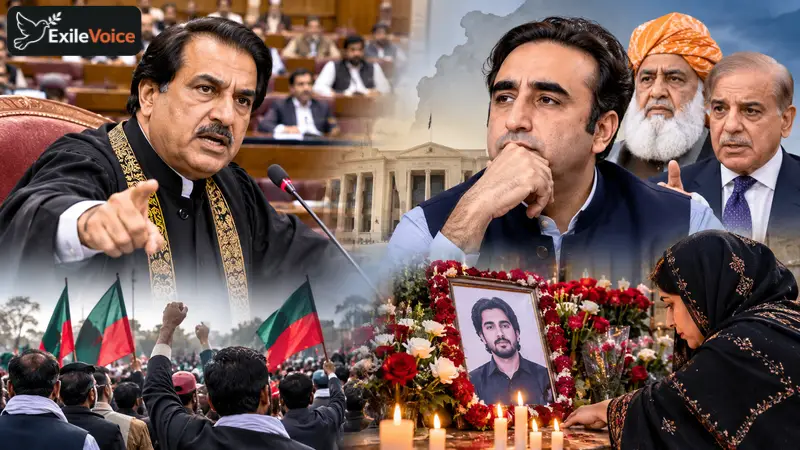

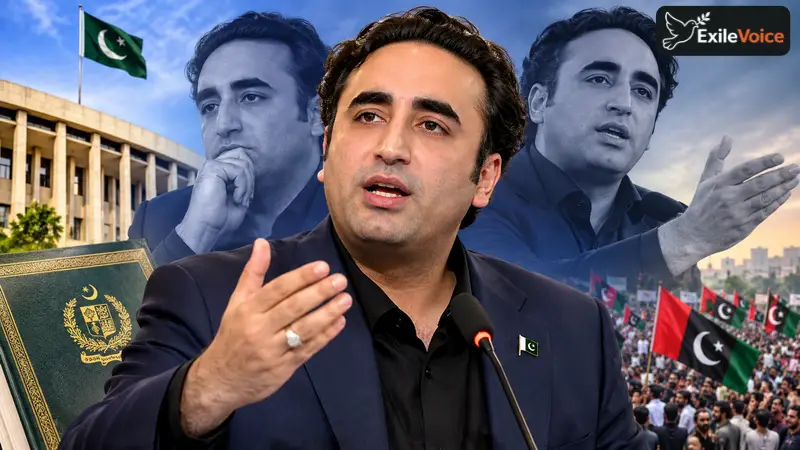
Pakistan Peoples Party (PPP) chairman Bilawal Bhutto Zardari drew renewed scrutiny following remarks addressing reserved seats, the 26th and 27th constitutional amendments, referendum proposals, accountability institutions, and the controversial phrase "brute majority." His comments reflected a delicate balancing act as political actors navigate institutional friction, public criticism, and shifting alliances within the ruling setup.
In his remarks, Bilawal stated that reserved seats belonging to Pakistan Tehreek-e-Insaf (PTI) should be returned, arguing that if PTI is denied its reserved seats, then the PPP, Pakistan Muslim League-Nawaz (PML-N), and JUI should not hold theirs either. Critics quickly pointed out that those very parliamentary seat allocations and coalitions underpinned the passage of the 26th and 27th constitutional amendments, raising questions about the timing of the PPP's push for restitution as political pressures mount.
Bilawal also proposed holding referendums on constitutional changes and on his earlier characterization of PTI founder Imran Khan as a political prisoner, asking whether that label was right or wrong. However, his accompanying remarks walked back or complicated that framing, reiterating accusations tied to May 9 and corruption rather than maintaining a consistent civil-liberties or political-prisoner stance. That duality drew sharp pushback from both critics and pro-establishment commentators, who noted that the PPP had participated in or benefited from parliamentary arrangements following disputed elections and institutional controversies.
A central point of contention in the discussion was Bilawal's effort to redefine or distance himself from the term "brute majority," which he had previously used and later sought to clarify as referring to a two-thirds majority or consensus rather than coercion. In political science and dictionary usage, a two-thirds supermajority refers to a numeric threshold in a legislature, whereas "brute majority" carries a distinct connotation of overriding minority rights, institutional checks, or deliberative norms through sheer force of numbers. Historical examples from global politics, such as authoritarian consolidations or constitutional emergencies where legislatures are bent to a single will, are often cited to illustrate why the phrase resonates so strongly in debates over democratic backsliding.
Alongside his remarks on constitutional amendments and referendums, Bilawal commented on accountability and press freedom, stating that accountability mechanisms fail when sacred cows are exempt and emphasizing that press freedom must be restored because journalism holds governments to account. Yet critics argued that calls for accountability and media freedom ring hollow when raised selectively after long periods of silence during institutional overreach. Ultimately, the episode underscores the credibility challenges facing traditional political parties when shifting positions between coalition accommodation and public grievance.