
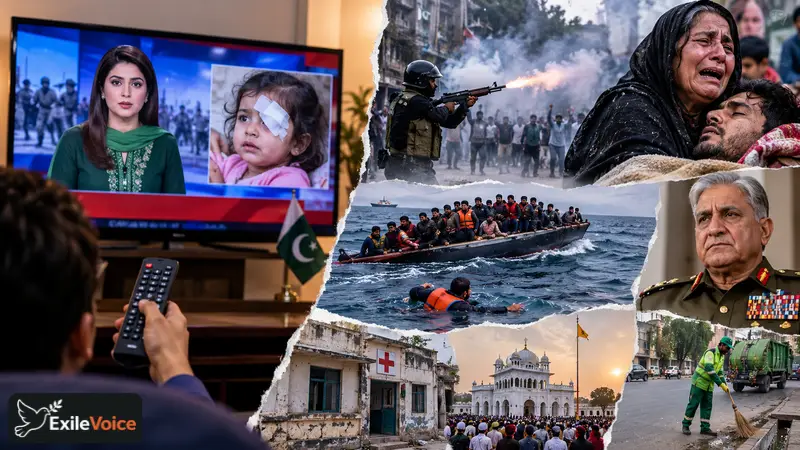
A sharp divide has emerged between official media directives pushed through television tickers and the urgent human and economic crises unfolding away from state controlled spotlights. Internal media screenshots and newsroom directives reveal a heavy emphasis on curated narratives, including stories highlighting an 18 month old girl in Indian administered Kashmir, Hiba Nisar, injured by pellet gun fire. While condemnation of violence against children and civilians anywhere is warranted on humanitarian grounds, observers question why such messaging is heavily packaged in Urdu for domestic audiences rather than English aimed at international diplomats and global media if external awareness is the goal.
Critics argue that domestic audiences already recognize injustices abroad, yet face a stark contrast at home when state forces are accused of severe violence against domestic protesters, such as during November crackdowns, or when accountability for alleged abuses remains elusive. Claims surrounding severe injuries to security personnel linked to past operations, alongside debates over the health and public appearances of former military figures like General Qamar Javed Bajwa, further fuel public skepticism whenever official narratives appear selective or inconsistent. When messaging prioritizes image management over transparency, credibility erodes quickly among citizens who experience daily realities firsthand.
Other official talking points circulated to newsrooms have drawn ridicule for focusing on minor administrative updates while major tragedies receive minimal coverage. Tickers touting arrangements for Baba Guru Nanak's 557th birth anniversary celebrations in Nankana Sahib, reopening a health center in Khyber Pakhtunkhwa after thirteen years under governor's rule, or municipal sanitation and drain cleaning drives in Dera Ismail Khan stand out for their narrow scope. Critics note that celebrating basic municipal duties or routine governance while ignoring broader institutional and infrastructure failures makes state publicity feel disconnected from public priorities. Even attempts by political figures to claim reflected glory from private sector achievements, such as streaming series on Netflix, underscore a broader habit of overstating credit.
Meanwhile, devastating human stories struggle for space in mainstream coverage. Reports that 35 young men from Bajaur died when a migrant boat capsized off Libya highlight the desperate lengths to which unemployed and economically squeezed youth go to reach Europe through perilous irregular routes. Despite the scale of the loss and the critical role of overseas remittances in keeping households and national foreign exchange afloat, official silence or muted response from foreign affairs and executive offices leaves affected families feeling abandoned. When young citizens risk their lives on dangerous sea crossings out of economic desperation, dismissing migration purely as a positive inflow misses the underlying failure to create safe livelihoods at home.
Bridging this gap requires more than polished press releases or selective newsroom tickers. Credible public communication depends on acknowledging tragedies promptly, engaging honestly with difficult questions, and aligning state action with citizens' immediate needs for safety, dignity, and economic opportunity. Until official narratives confront hard realities directly rather than relying on staged optics, public trust in state messaging will remain severely strained.