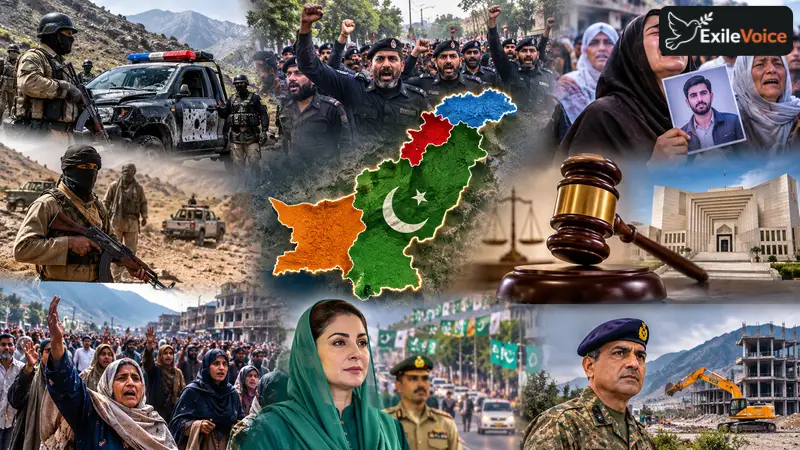

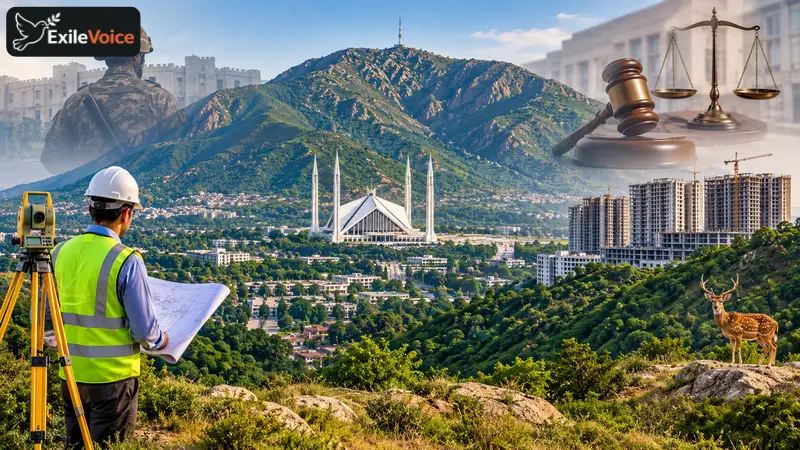
Land ownership, capital planning, and environmental protection in Islamabad have become central points of public debate following detailed reporting by Brief PK and ongoing legal and administrative disputes over high-value real estate in and around the federal capital. Analysts and commentators examining the situation point to overlapping claims involving the Capital Development Authority (CDA), federal and provincial authorities, military institutions, and local residents whose families have lived in surrounding areas for generations.
At the center of the discussion is a reported plan to establish a General Headquarters (GHQ) relocation footprint spanning roughly 2,400 acres near F-9 Park and the Margalla Hills, even though actual office requirements in the layout were cited at around 99 acres. Remaining acreage in such large-scale capital expansions often raises questions about residential development, commercial land value, and the broader urban carrying capacity of Islamabad. Observers note that capital cities are typically planned with controlled population density and protected green belts, making proposals for large housing blocks, such as 14,000 residential apartments, a subject of intense scrutiny.
Further complicating the land picture are reported requests for additional acreage along the upper ridges toward Khyber Pakhtunkhwa, where security rationales have been cited alongside disputes over compensation and displacement of rural communities. Reports highlight an initial request for 240 acres that reportedly expanded within seven weeks to 435 acres, an 81 percent increase, prompting questions over transparency, valuation fairness, and coercion concerns. Critics also point to pricing discrepancies between acquisition costs paid by the CDA and transfer rates cited in commentary, arguing that public resources and taxpayer funds face significant exposure when land transactions lack clear public accounting.
Separate from the relocation proposal is a long-running legal dispute over approximately 8,602 acres, often described as around 70,000 kanals, in the Margalla Hills area. Historical references in the dispute trace back to a 1910 British-era notification (Notification No. 266) allocating land for military animals such as horses and mules to grow fodder, followed by administrative transitions involving the CDA after 1961 and the designation of the Margalla Hills National Park in April 1980. Commercial activity on national park land, including leases such as the Monal restaurant site, drew judicial scrutiny in Islamabad courts, including questions raised by Justice Athar Minallah in January 2022 regarding title, lease authority, and environmental preservation.
Subsequent litigation and constitutional shifts have kept the legal status of contested tracts in flux, including a Supreme Court ruling in August 2024 that rejected ownership claims over park land before later constitutional changes and challenges re-opened legal arguments. For urban planners, legal scholars, and conservationists, these overlapping disputes underscore a foundational governance question in Pakistan: how to balance state security requirements, institutional real estate demands, fair compensation for affected residents, and the protection of ecological heritage in the Margalla Hills.