
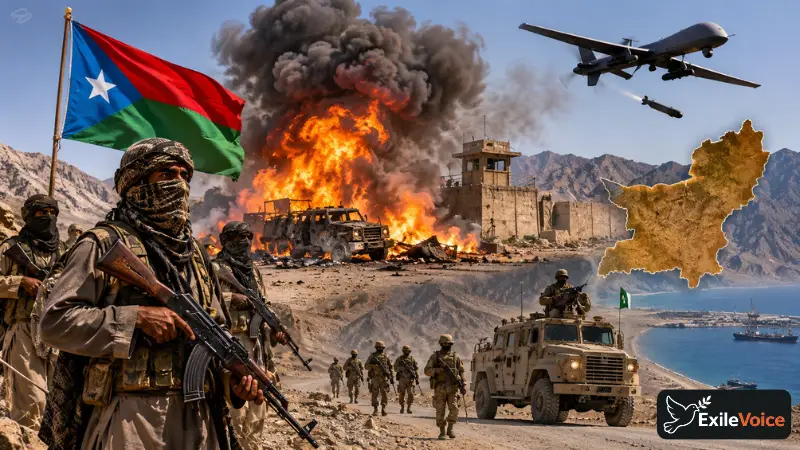
The security situation in Balochistan has deteriorated significantly, highlighted by a devastating attack in the Mastung area where a vehicle packed with explosives was rammed into a military camp, resulting in the casualties of over 18 military personnel. This incident underscores the escalating frequency of violent attacks orchestrated by militant groups, notably the Baloch Liberation Army (BLA), which continues to pose a severe challenge to state infrastructure and law enforcement agencies. Observers note that these militant factions have evolved their tactical capabilities significantly, employing advanced weaponry and modern warfare techniques, including kamikaze drones equipped with explosives.
Furthermore, reports indicate that these groups maintain sophisticated tracking mechanisms, potentially utilizing satellite connectivity to monitor military convoys and execute precise ambushes. In several interior regions, state writ has been heavily contested, with militant groups openly displaying separatist symbols and establishing de facto control over remote areas for extended periods. Analysts emphasize that while the immediate response relies heavily on military measures, addressing the root causes requires a critical examination of historical governance decisions, regional geopolitics, and political disenfranchisement. The strategic positioning of Balochistan, sharing borders with Afghanistan and Iran and bordered by a vast coastline, makes it a focal point of intense regional and international interest, heightening the urgency for sustainable peace and administrative reform.