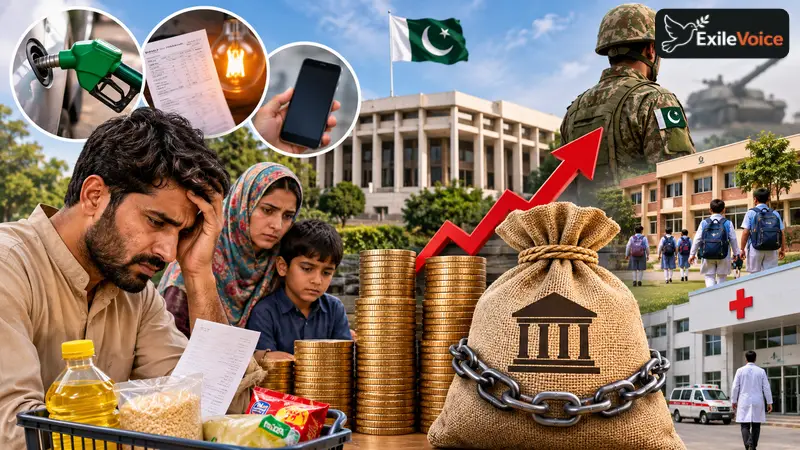
A common refrain in debates over Pakistan's economy is that too few citizens pay taxes, yet a closer look at everyday household spending shows that low-income earners pay indirect taxes almost every time they buy basic goods or pay utility bills. A daily wage worker or motorcycle commuter without a formal tax number still encounters sales taxes on cooking oil and ghee, levies built into fuel prices, taxes on mobile top-ups, and sales tax plus surcharges on electricity bills. Because these levies are embedded in consumption rather than tied to income levels, they place a heavier relative burden on households that spend nearly all their earnings on necessities.
Federal budget figures for FY 2026-27 illustrate how tax revenues are collected and where public money goes. With a total federal outlay of roughly Rs 18.771 trillion and a Federal Board of Revenue collection target above Rs 15.2 trillion, consumption-based taxes and fuel levies carry heavy weight alongside salaried and corporate tax streams. Under constitutional revenue-sharing rules, a large share transfers to the provinces, which carry primary responsibility for schools, hospitals, and local policing, leaving the federal government with a smaller net pool to manage national obligations.
Once federal funds are allocated, debt interest payments absorb the single largest share of spending, consuming roughly Rs 8.054 trillion, followed by defence allocations of around Rs 3 trillion and pension outlays. That fiscal structure leaves limited room for federal development projects, social protection programs such as BISP, and human capital investment. When debt servicing crowds out discretionary spending, policymakers face a narrow fiscal corridor where raising revenue without strangling growth or hurting the poor becomes increasingly difficult.
For ordinary citizens, the practical test of fiscal policy is whether tax collection translates into quality schools, accessible healthcare, clean water, and public safety. With millions of children out of school and public spending on health and education historically low as a share of GDP, bridging the gap between taxation and public services remains Pakistan's defining economic challenge. Broadening the tax base fairly, curbing waste, and protecting vulnerable households from regressive levies are essential steps toward a more equitable social contract.