
Pakistan's political and economic landscape has increasingly centered on institutional power, resource extraction, and large-scale land administration. Discussions surrounding recent policy shifts highlight a growing focus on mineral wealth and real estate development, raising critical questions about oversight, provincial rights, and public accountability.
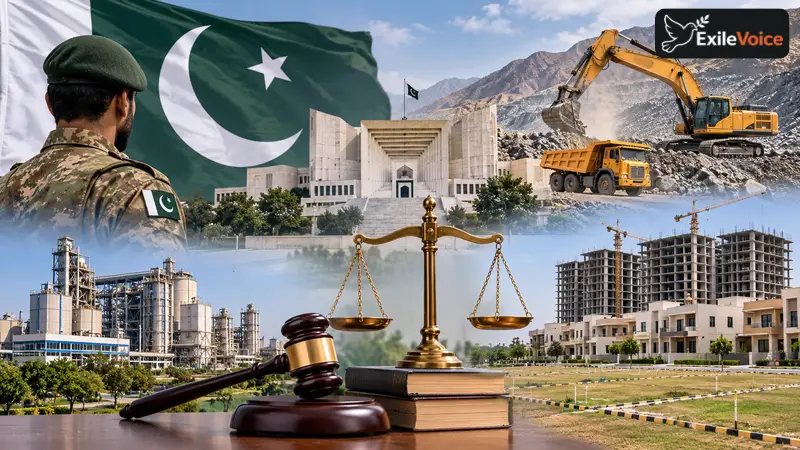
At the heart of resource governance debates are executive ordinances and administrative structures directed toward mineral extraction and state land allocation. Observers note that ordinances tied to land colonies and mining rights shape how natural resources in regions such as Khyber Pakhtunkhwa are accessed and managed. Specialized command structures and policy initiatives geared toward minerals underscore how strategic economic assets are becoming central to statecraft and institutional leverage.
Alongside mineral policy, enforcement actions and real estate controversies reflect broader tensions over land use and legal authority. Developments involving anti-corruption bodies, provincial revenue and building authorities, and land acquisitions in cities like Quetta and Bahawalpur illustrate competing claims over public and private property. High-profile disputes over commercial housing projects and institutional land transfers draw attention to whether statutory frameworks and judicial oversight keep pace with rapid expansion.
Corporate conglomerates linked to the military establishment further illustrate the scale of institutional economic participation. Founded in 1954 to support former military personnel, Fauji Foundation has expanded into one of Pakistan's largest business groups, spanning fertilizers, energy, cement, banking, food products, aviation, and power. Figures cited in market and policy commentary point to hundreds of billions of rupees in annual revenues across listed entities, alongside debates over gas pricing, tax exemptions, and public accountability.
Judicial scrutiny over land acquisition has crystallized these governance questions. Legal challenges to the Defence Housing Authority Quetta statute, including rulings by the Balochistan High Court and subsequent orders by the Supreme Court of Pakistan, asked how an acquiring body can obtain land for itself without a conflict of interest. Subsequent provincial amendments in 2024 expanded statutory reach across Balochistan while leaving core constitutional and conflict-of-interest questions at the center of ongoing public debate.
Ultimately, the intersection of mineral policy, corporate scale, and land acquisition tests Pakistan's institutional balance. Transparent auditing, clear statutory boundaries, and equitable resource sharing remain essential to building public trust across provinces and strengthening long-term economic governance.