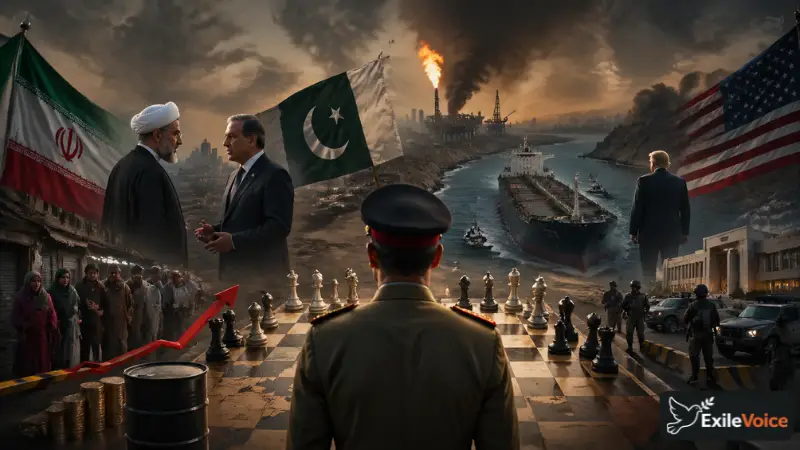
As the regional conflict involving Iran and the United States approaches its second month, the global economic fallout is becoming increasingly stark. Since the inception of the crisis 57 days ago, the price of oil has surged from $75 per barrel to nearly $110. This volatility is not merely a byproduct of the skirmishes in Lebanon or the Red Sea but is directly tied to the uncertainty surrounding the Strait of Hormuz, the world’s most critical energy chokepoint. In this environment, Pakistan’s attempt to manage "Project Pakistan", a dual-track policy of regional mediation and domestic self-projection, has reached a critical juncture where the costs of failure are beginning to outweigh the benefits of visibility.
The Pakistani military establishment has heavily leaned into "Military Diplomacy," attempting to use its unique access to both Tehran and Washington to rehab its international image. However, the professional insights provided by analysts suggest that Islamabad may have "over-reached." While the world initially lauded Pakistan’s ability to host high-stakes discussions, the process became marred by high-profile leaks and a perception of domestic grandstanding. The focus shifted from the substance of peace to the "cult of personality" surrounding its leadership. When Foreign Minister Abbas Araghchi visited Islamabad recently, the Iranian delegation maintained a visible distance from the "mediation" label, officially calling the visit "bilateral" to satisfy their own domestic hardliners. This disconnect between Pakistani projection and Iranian reality has contributed to the current diplomatic stalemate.
The strategic reality for Pakistan is that its utility as a "bridge" is only as strong as the bridge’s maintenance. The current "offline" status of US-Iran talks exposes the fragility of Pakistan’s position. If the negotiations do not resume, the economic burden will fall squarely on the shoulders of the Pakistani public, who are already facing the inflationary pressures of rising oil prices. Furthermore, the domestic cost of these high-stakes maneuvers includes increased security lockdowns and political suppression within Islamabad, as the state attempts to present a "sanitized" image of stability to visiting foreign dignitaries. As the conflict enters a more dangerous phase with potential ground escalations, Pakistan must transition from "pomp and publicity" back to the quiet, discreet back-channel diplomacy that characterized its successful mediation efforts of the 1970s.