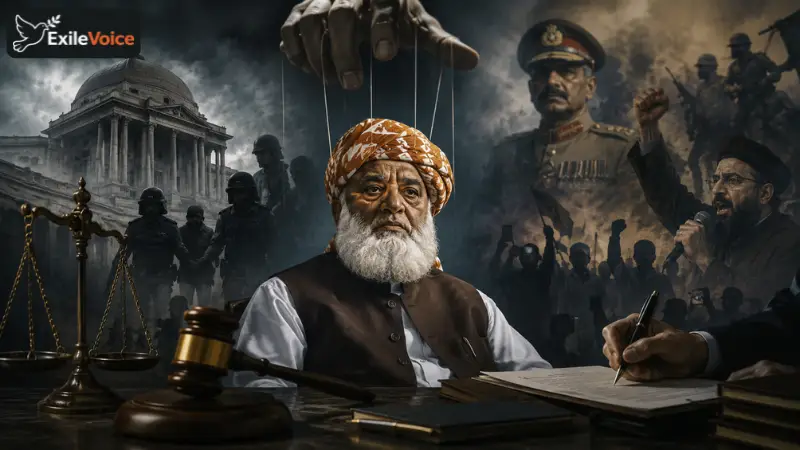
In the complex theater of Pakistani politics, legal maneuvers are often used as tools for political realignment and pressure. Recent events surrounding Maulana Fazlur Rehman, specifically the emergence of multiple legal cases against him alleging treason and inciting rebellion, highlight the recurring use of the judicial system to target political actors. The filing of an FIR in Kasur and subsequent summons by a court in Gujranwala suggest a coordinated effort to suppress dissenting voices by utilizing legislation typically reserved for security threats.
The legitimacy of these cases has been questioned, particularly following reports that the complainant in the Kasur FIR denied filing the charges, suggesting his identity may have been exploited or coerced. This pattern, where legal actions are initiated in multiple provinces simultaneously, is frequently observed in Pakistan’s political history, often signaling an attempt by state institutions to maintain control or discredit individuals who have become inconvenient to the establishment.
Simultaneously, the online discourse surrounding Maulana Fazlur Rehman has become increasingly hostile. Social media accounts linked to high-ranking officials have issued thinly veiled threats and revived historical corruption allegations via the National Accountability Bureau (NAB). This selective application of accountability, whereby corruption cases are emphasized when politically expedient and ignored otherwise, reflects a broader systemic issue in the country’s approach to governance and law.
The situation is further complicated by the emotional rhetoric surrounding the "sanctity of martyrs." Figures like Maulana Tahir Ashrafi have used public platforms to defend the military establishment against perceived slights, leading to accusations of using historical narratives to shield current actions from criticism. As the political climate grows more polarized, the use of the judicial system as a political weapon, combined with the mobilization of inflammatory rhetoric, threatens to further destabilize the already fragile democratic framework of the nation.