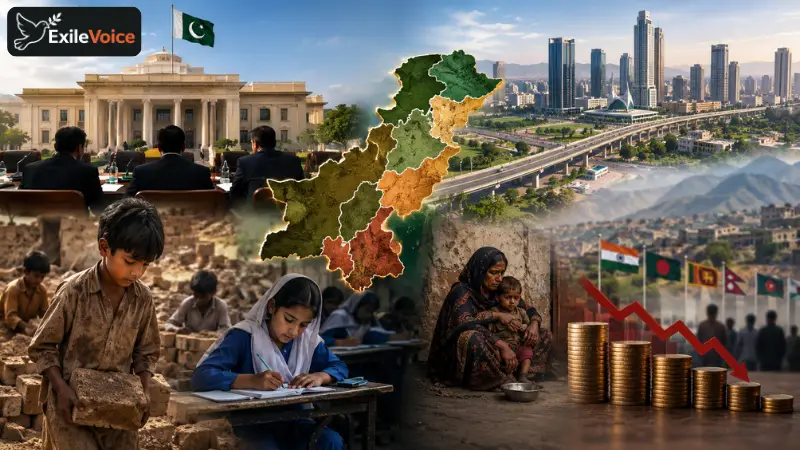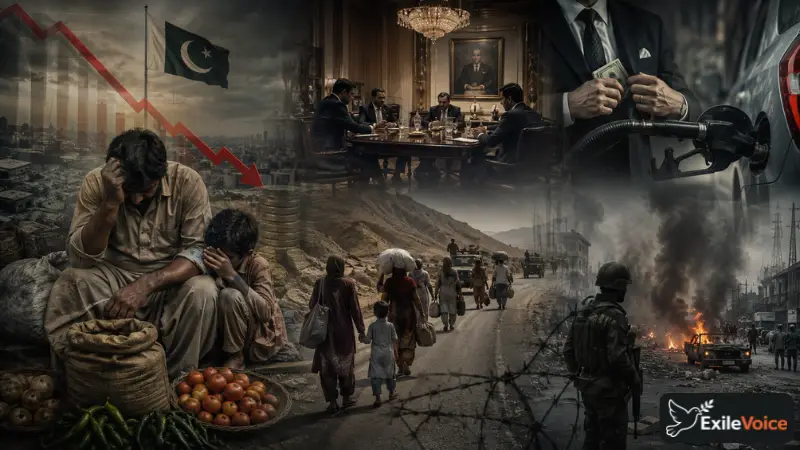
Pakistan is currently grappling with a severe convergence of economic instability and administrative failure, marked by a breakdown in law and order and a decline in governance effectiveness. The promise of economic revitalization through initiatives like the Special Investment Facilitation Council (SIFC) and various "Green Initiatives" has largely remained unfulfilled, with the country facing ongoing inflation and fiscal mismanagement.
A critical point of failure identified is the disconnect between state-level promises and the lived reality of citizens. For instance, despite the global decline in oil prices, domestic fuel costs in Pakistan remain high due to heavy taxation and levies. This fiscal burden, combined with the government's inability to foster political stability, has severely hampered the country's economic potential. Furthermore, reports of corruption within the diplomatic service, such as the recent controversy regarding rent inflation in foreign embassies, illustrate a systemic issue where administrative roles are exploited for personal gain.
The security situation in provinces like Balochistan further complicates the picture. With constant reports of violence and the inability of citizens to travel freely between provinces due to identity-based threats, the concept of a unified, secure state is being challenged. The reliance on opaque "security sources" for official communication, rather than institutional transparency, has deepened public distrust. As the current administration struggles to deliver on its mandates, the prevailing sentiment is one of a systemic crisis, where policy failure has become the norm, and the burden is disproportionately felt by the general public