

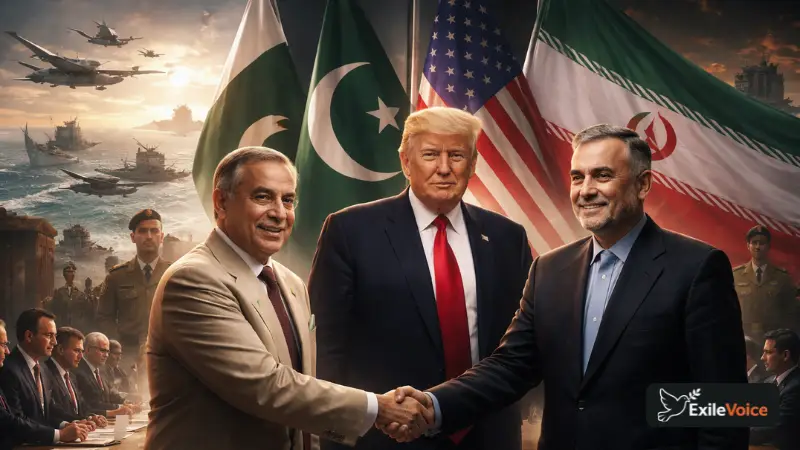
In a dramatic shift of regional influence, the traditional power dynamics between India and Pakistan in the eyes of Washington have undergone a profound transformation. As of late March 2026, the international community is witnessing a scenario that few analysts would have predicted a year ago: India finding itself sidelined while Pakistan emerges as a central diplomatic conduit between the Trump administration and the Iranian leadership. This shift is not merely a matter of chance but the result of a deliberate, multi-layered engagement strategy involving high-level military contacts and business-driven diplomacy.
The genesis of this re-alignment can be traced back to "Operation Sindoor" in May 2025. During this period, General Asim Munir and his team successfully cultivated a deep-rooted relationship with Steve Witkoff and his son, Jack Witkoff, individuals central to President Donald Trump’s inner circle. This "business-first" approach to diplomacy provided Pakistan with a direct line to the Oval Office that bypassed traditional State Department channels. While Prime Minister Narendra Modi’s administration in India initially appeared to have the upper hand following Trump’s inauguration in early 2025, a series of trade disputes, tariffs on Russian oil, and restrictive visa policies have since soured the New Delhi-Washington relationship.
The contrast in diplomatic posturing is stark. Pakistan’s leadership, specifically through Prime Minister Shehbaz Sharif and Foreign Minister Ishaq Dar, has been vocal in its praise of the U.S. role, even going so far as to suggest a Nobel Peace Prize for Donald Trump. Conversely, India’s strategic autonomy and its refusal to align completely with U.S. interests in the Middle East have left it out of the current "peace-making" inner circle. Prominent Indian diplomats, such as T.C. Raghavan, have noted that the Indian establishment is currently grappling with the reality that Pakistan, once thought to be internationally irrelevant, is now seated firmly at the decision-making table regarding the Iran crisis.
However, the "peace-maker" role played by Pakistan is viewed with significant skepticism by seasoned defense analysts. While Pakistani media outlets celebrate the "diplomatic breakthrough" of being a neutral mediator, many in the West view this as a convenient utility for the Trump administration to buy time while military assets are moved into position. The current Pakistani regime, often referred to as the "Sharif-Zardari-Asim" establishment, is seen as using this international relevance to bolster its domestic standing and tighten its grip on power against a backdrop of internal political suppression.
The situation remains fluid. Reports suggest that messages are being exchanged between Tehran and Washington through Pakistani intermediaries. While some headlines suggest that Iranian officials like Foreign Minister Abbas Araghchi and Speaker Mohammad Bagher Ghalibaf are seeking de-escalation, the underlying reality is a massive military buildup in the Persian Gulf. For Pakistan, the gamble is immense: should the "peace" talks fail and a full-scale war erupt, its proximity to the conflict and its involvement in the preliminary negotiations could place it in a precarious position between a vengeful Iran and a demanding United States.

