

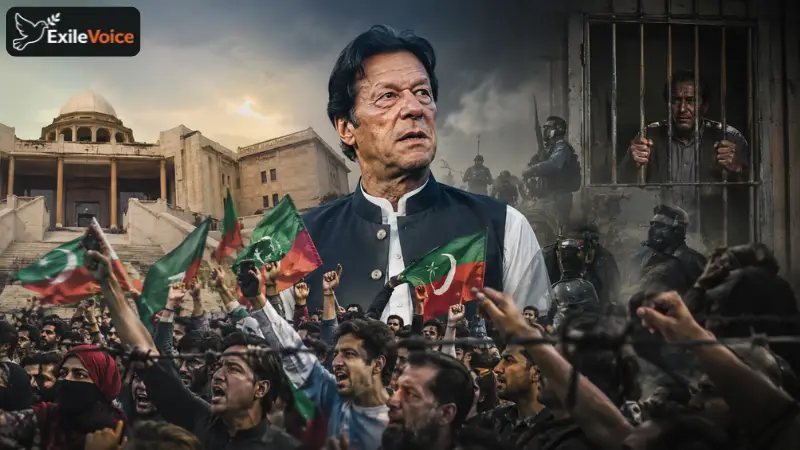
The political landscape of Pakistan continues to be defined by the enduring influence of former Prime Minister Imran Khan, a phenomenon widely analyzed as "The Imran Effect." Despite years of detention, legal battles, and continuous institutional pressure, Khan’s political resonance remains a central axis of national discourse. International media coverage, legal analyses, and widespread public mobilization underscore how his political footprint transcends standard partisan politics, evolving into a broader populist movement that challenges conventional statecraft.
At the core of this dynamic is a widening rift between the political establishment and a mobilized populace. Protests and public demonstrations, ranging from gatherings in Khyber Pakhtunkhwa to localized movements in regions like Azad Kashmir, reflect deep seated economic and political grievances. Critics of the current administrative setup point out that the suppression of popular political factions has inadvertently created power vacuums, paving the way for grassroots coalitions and heightened civic unrest. These developments suggest that traditional methods of political management are increasingly failing to contain public dissent.
Furthermore, the discourse surrounding Khan's tenure highlights a sharp polarization in evaluating governance outcomes. While detractors point to administrative missteps, economic pressures, and policy hurdles during his time in office, supporters emphasize key developmental milestones. These include pandemic management, initiatives in healthcare expansion through health cards, higher remittance inflows from overseas Pakistanis, and foreign policy assertiveness. The juxtaposition of these narratives illustrates a deeply divided society where economic metrics and political legitimacy are fiercely contested.
The implications of this ongoing political insurgency extend beyond domestic governance, influencing Pakistan's regional positioning and international image. Global media outlets and human rights organizations frequently spotlight the legal proceedings and detentions associated with the opposition, framing them within broader debates on democratic norms and judicial independence. As political actors and civil society groups navigate this turbulent environment, the central challenge for the state remains finding a sustainable path toward political stability and institutional trust.

