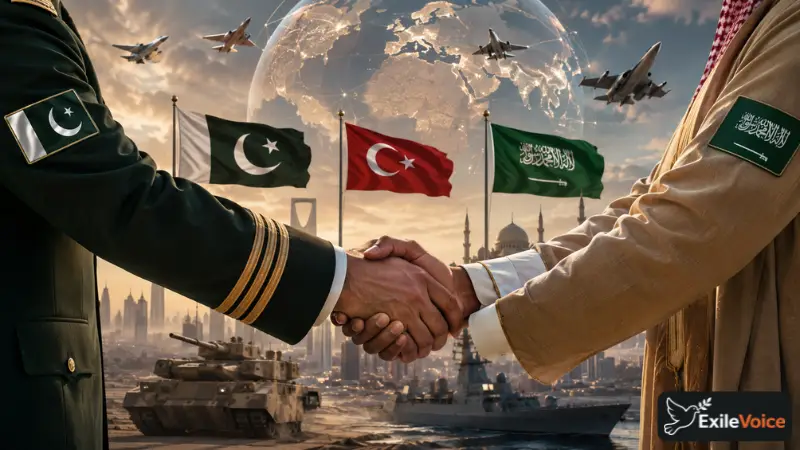
Recent geopolitical developments highlight an evolving defense alignment between Pakistan, Saudi Arabia, and Turkey. According to reports from Euronews, high-level diplomatic and military leadership from Pakistan, including Prime Minister Shehbaz Sharif and Field Marshal Syed Asim Munir, traveled to Saudi Arabia to advance a tripartite defense agreement. Turkish President Recep Tayyip Erdogan was also scheduled to arrive in Saudi Arabia to participate in these high-level discussions.
This prospective agreement brings into focus the distinct geopolitical and resource dynamics of the participating nations. While Saudi Arabia possesses immense financial resources and oil reserves, it faces security requirements that have historically relied heavily on Western military frameworks, particularly United States military presence and basing. However, structural limitations in personnel willingness and strategic foreign commitments often constrain major external powers from deploying ground forces directly for regional defense. Conversely, Pakistan offers extensive active military personnel and manpower capacity, while lacking equivalent domestic economic strength or advanced domestic defense manufacturing scale.
The inclusion of Turkey in this framework introduces a critical layer involving NATO dynamics. Turkey functions as a key member of the North Atlantic Treaty Organization. Integrating Turkey into a formalized regional defense arrangement with Gulf and South Asian partners alters traditional security equations. Analysts note that such developments raise complex questions regarding mutual defense obligations, regional deterrence postures, and the broader involvement of international alliance structures in Middle Eastern and South Asian security architectures.
Diplomatic engagement surrounding this initiative also reflects ongoing friction between regional actors. Reports indicate that international stakeholders and think tanks, such as the Center for International Strategic Studies (CISS) in Islamabad, have engaged in intense dialogue regarding regional stability, foreign policy trajectories, and diplomatic positioning vis-a-vis neighboring states like Iran. As regional diplomacy shifts through various mediation channels, strategic adjustments continue to shape Pakistan’s foreign relations and defense partnerships.