

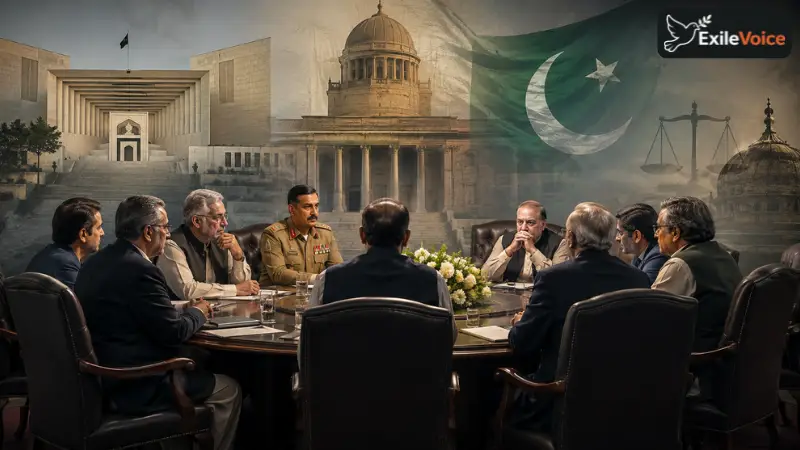
The political framework of Pakistan continues to experience structural tensions, driven by complex interactions between civilian leadership and institutional forces. Recent high-level discussions among key political figures and military leadership have underscored an ongoing emphasis on administrative restructuring and governmental stability. Observers note that these closed-door deliberations highlight persistent debates surrounding governance models, executive performance metrics, and the distribution of administrative responsibilities across federal and provincial levels.
Discussions concerning administrative reforms often point to the challenges of managing large bureaucratic structures and ministerial efficiency. Proponents of structural review advocate for independent third-party evaluations of government ministries to enhance accountability and streamline public service delivery. Such proposals reflect broader discussions about modernizing state institutions to improve responsiveness and economic performance. At the same time, questions regarding political continuity and the tenure of elected officials remain central to analyses of the country's legislative and executive branches.
The broader discourse also encompasses comparisons with international democratic frameworks, particularly bicameral systems and decentralized local governance models observed in various Western and regional democracies. Analysts frequently debate the merits of empowering local authorities versus maintaining centralized administrative machinery, noting that effective grassroots representation can significantly impact civic engagement and the resolution of daily public grievances. As these political and administrative dialogues evolve, the focus remains on achieving long-term institutional stability and functional governance within the existing constitutional framework.

