The landscape of South Asian and Middle Eastern politics is undergoing a profound transformation as the conflict between the Islamic Republic of Iran and a coalition led by Israel and the United States continues to unfold. For Pakistan, a nation often caught between competing global interests, the current hostilities have forced a strategic realignment that carries significant implications for its domestic democratic struggle and its international standing.
Observing the discourse within Pakistan over the past month, a striking pattern emerges: the focus of the national narrative has shifted almost entirely from internal political crises to the external regional war. This shift is not merely a matter of public interest but represents a calculated move by the current administration. The "realization" among analysts is that the incumbent regime in Pakistan, often characterized by critics as lacking a genuine democratic mandate, is leveraging the regional crisis to solidify its legitimacy by aligning itself with the world's most powerful political entities, specifically the Zionist influence in the West and the Trump administration’s Middle East policy.
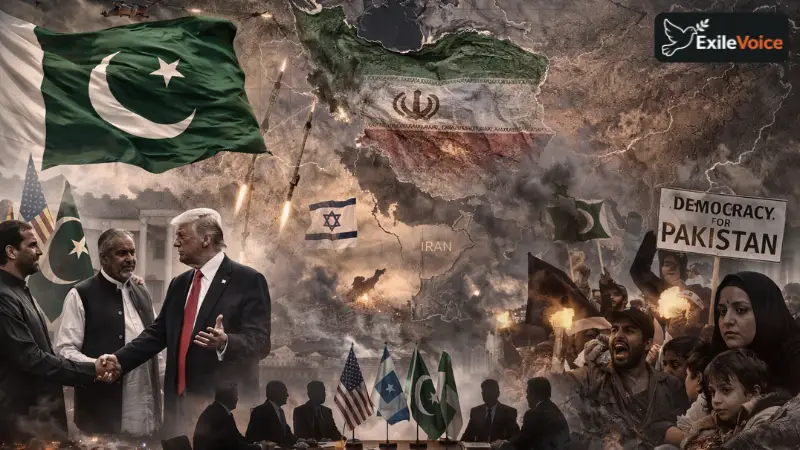
Historically, the seeds of this alignment were sown long before the current escalation. Evidence of engagement between Pakistani delegations and Israeli officials has been surfacing since the tenure of General Bajwa. These interactions, often facilitated by non-governmental organizations or international intermediaries, pointed toward a normalization process that was hidden from the public eye. Today, that process has accelerated. The warm embrace of Pakistani leadership by U.S. President Donald Trump is interpreted by many as a clear signal that Pakistan has been assigned a specific role in the strategy against Iran.
The consequences of this "Zionist-aligned" foreign policy are dual-edged. Internationally, Pakistan enjoys a renewed sense of importance, often framed in the domestic media as a triumph over regional rivals like India. The narrative suggests that while India has been sidelined, Pakistan remains a central player in the "Board of Peace" and regional security frameworks. However, the domestic cost is high. By tethering itself to international power structures that prioritize regional containment over democratic values, the Pakistani state is accused of marginalizing the indigenous struggle for civil rights and democratic governance. The democratic journey of the Pakistani people, marked by years of struggle and sacrifice, faces a significant setback as the state prioritizes strategic utility for global powers over the constitutional rights of its citizens.
Ultimately, the lack of critical analysis within Pakistan's mainstream media regarding these shifts is concerning. The pride felt in being a "major player" on the world stage often masks the reality that the country may be acting as a tool for interests that do not necessarily align with regional peace or domestic democratic stability.