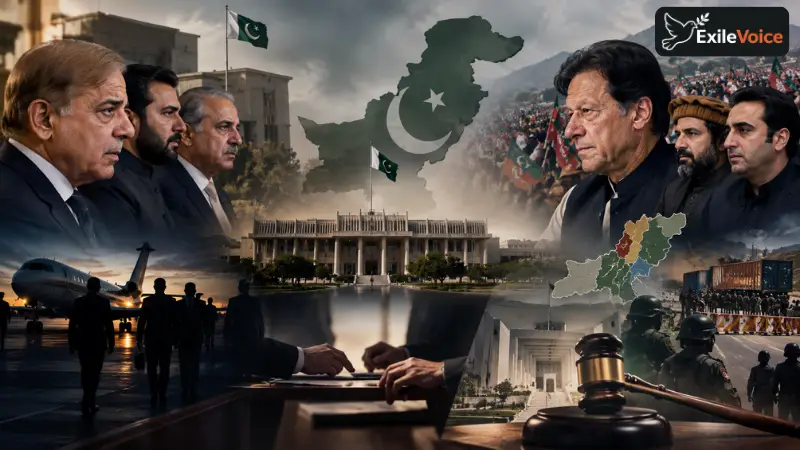
Oxford University has long served as an educational crucible for South Asia's elite political class, producing some of Pakistan's most prominent leaders. From early figures like Malik Firoz Khan Noon to contemporary political actors, the institutional connection between Oxford and Pakistani statecraft is deep-rooted. However, a historical examination reveals a recurring pattern of severe friction between Oxford-educated leaders and the country's institutional establishment, often culminating in political marginalization, exile, or tragic outcomes.
Malik Firoz Khan Noon, who earned a degree in history and Persian from Wadham College, Oxford, in 1916, became prime minister before being abruptly removed and permanently sidelined from politics during the martial law era under Ayub Khan and Iskander Mirza. Similarly, Huseyn Shaheed Suhrawardy, an alumnus of St. Catherine's College, Oxford, faced a parallel fate. After serving in high political office, Suhrawardy was forced out, arrested on politically motivated charges in 1962, and ultimately faced exile, passing away under unclear circumstances in a Beirut hospital.
Pakistan's first prime minister, Liaquat Ali Khan, an alumnus of Exeter College, Oxford, met a violent end when he was assassinated in Rawalpindi in 1951. The historical trajectory continued with Zulfikar Ali Bhutto, who attended Christ Church, Oxford, achieving distinction and honors before his execution in 1979. Former Prime Minister Imran Khan, a Keble College graduate, similarly faced imprisonment, legal battles, and state opposition.
This persistent pattern highlights an underlying tension within the political ecosystem. Whether through forced removal, constitutional ousters, or physical elimination, Oxford-educated leaders in Pakistan have frequently collided with authoritarian or military-led structures. This dynamic underscores the systemic challenges faced by intellectual elites attempting to navigate Pakistan's complex political landscape, where institutional power struggles often override academic credentials and democratic mandates.