
Recent administrative and political developments in Pakistan highlight how legal ordinances, intra government friction, and security messaging in restive border districts intersect during a period of heightened strain. Following the issuance of a set of presidential ordinances, attention turned toward a measure affecting Khyber Pakhtunkhwa assembly members, which commentators noted alters statutory protections and arrest notification procedures tied to assembly privileges. Critics argue that removing prior speaker notification or arrest safeguards exposes provincial lawmakers to rapid detention and weakens legislative immunity, deepening friction between provincial representatives and central or security authorities.
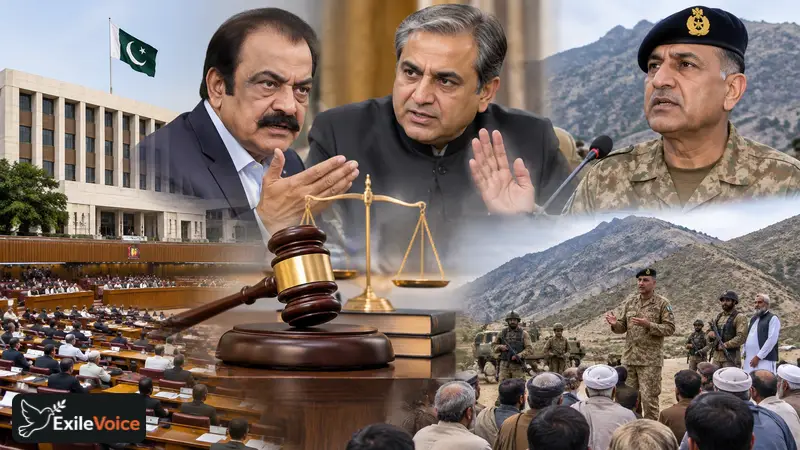
At the same time, sharp public exchanges between senior figures tied to the ruling setup and administrative leadership have exposed underlying rivalries over influence and policy direction. Comments by PML N leader Rana Sanaullah criticizing business figures who align closely with successive military chiefs and push ideas such as creating new provinces drew a pointed warning from Interior Minister Mohsin Naqvi in a television interview. Without naming his target directly, Naqvi cautioned against repeated attacks on television and implied he possessed damaging details, illustrating how personal and institutional grievances are increasingly spilling into public view.
Further north, security and governance messaging took center stage during a visit by Peshawar Corps Commander Lieutenant General Muhammad Naeem Akhtar to North Waziristan. Addressing local elders, religious scholars, youth, and media representatives, he prayed for peace, economic development, education, and healthcare across North Waziristan and Khyber Pakhtunkhwa while pledging commitment to stability and rejecting hidden agendas or resource exploitation. In a region long affected by militancy, counterinsurgency operations, and disputes over local resources and development, public pledges of accountability are intended to reassure local communities and project state resolve.
Yet public skepticism toward official assurances remains high across parts of the country, where residents closely scrutinize the gap between formal rhetoric and lived realities on the ground. Whether the debate centers on ordinances affecting elected legislators in Khyber Pakhtunkhwa, public feuds among powerful political actors, or security pledges in North Waziristan, trust in state institutions remains a central battleground. How authorities balance security imperatives, legal safeguards, and public accountability will shape political stability in the months ahead.