
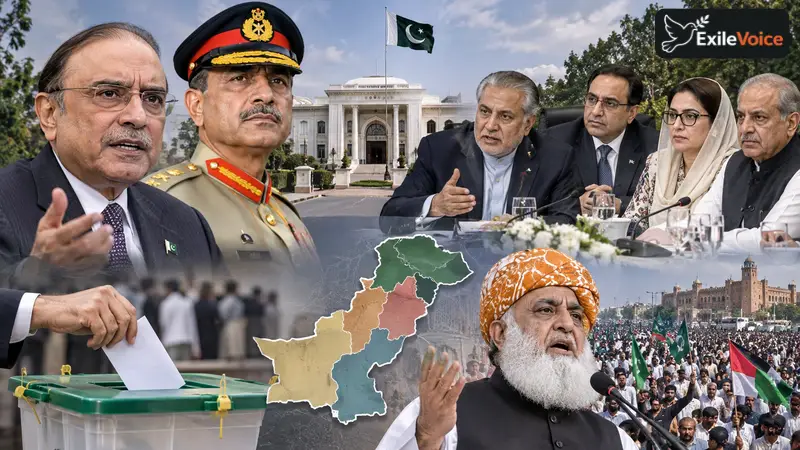
Reports surrounding a lengthy meeting at Aiwan e Sadr involving President Asif Ali Zardari and a senior figure widely identified in political commentary as Army Chief General Asim Munir have brought renewed scrutiny to power dynamics in Islamabad. According to accounts discussed in mainstream newspapers and political circles, the prolonged interaction began one on one before expanding to include senior leaders from the ruling coalition, such as Ishaq Dar, Ayaz Sadiq, Sherry Rehman, and Raja Pervaiz Ashraf. While discussions touched on coalition management and political grievances, the central takeaway highlighted in newspaper reporting focused on a stark assertion made during the engagement that views expressed by members of parliament do not constitute the public will without a referendum.
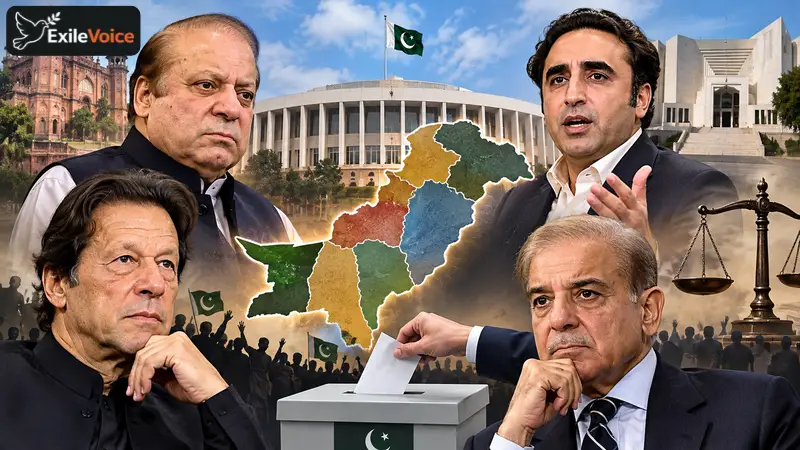
That framing carries major implications for Pakistan's constitutional and electoral politics. Since the disputed February 2024 general elections and subsequent parliamentary maneuvers, questions surrounding representation, mandate legitimacy, and executive authority have remained contentious. Suggesting that legislative opinions lack decisive weight absent a referendum shifts the center of political gravity away from elected assemblies and toward plebiscitary mechanisms or judicial validation through constitutional benches. Historical precedents in Pakistan's political history, including referendums conducted under Ayub Khan and Zia ul Haq, show how tightly framed plebiscites have historically been used to consolidate executive power and produce lopsided outcomes rather than settle contested political questions openly.
Alongside referendum talk, proposals to carve out new provinces and hold separate provincial referendums on the issue have rapidly moved from rumor to fierce political contestation. Columnists close to establishment circles have argued that institutional patience with political stalemate has worn thin after disputes over major projects, water and mineral resources, and administrative restructuring. At the same time, provincial dynamics are already showing signs of strain. In Sindh, opposition between Sindhi nationalist groups opposed to territorial division and urban factions such as MQM Pakistan advocating for new administrative units raises serious concerns about street unrest and law and order if rival demonstrations collide.
Meanwhile, coalition cohesion appears increasingly fragile even as parties share power and state offices. Tensions between the Pakistan Peoples Party and the Pakistan Muslim League Nawaz have surfaced openly through sharp exchanges between leaders like Khawaja Asif and Sherry Rehman over shifting political stances toward Imran Khan, as well as disagreements over gubernatorial conduct and provincial governance. Simultaneously, Jamiat Ulema e Islam leader Maulana Fazlur Rehman has stepped up bar council appearances, disputed conflicting claims regarding his security detail, and announced protest plans in Sindh, leaving observers watching closely to see how shifting alliances reshape pressure points across the federation.