
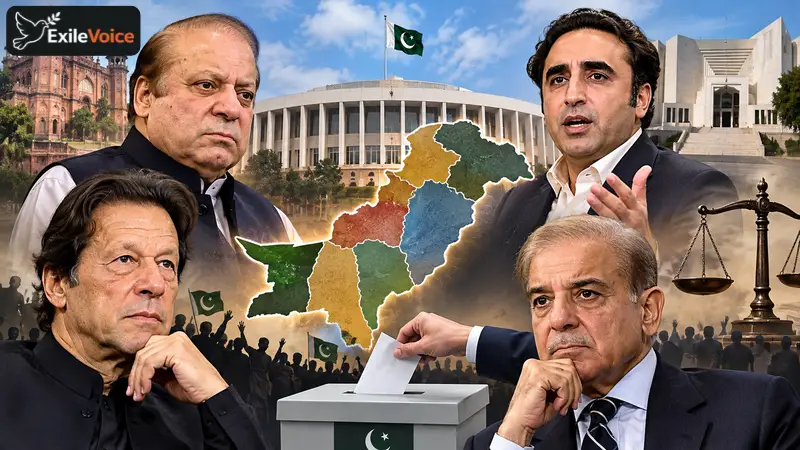
Renewed talk of carving out new administrative provinces and holding a public referendum has reopened long-standing constitutional, regional, and coalition fault lines across Pakistan. In his November 23, 2026 analysis, Dr. Shahbaz Gill dissects conflicting signals from the Pakistan Muslim League-Nawaz (PML-N), the Pakistan Peoples Party (PPP), and Pakistan Tehreek-e-Insaf (PTI), alongside disputes over parliamentary authority and constitutional courts.
A major thread in the discussion centers on shifting rhetoric around referendums and new provinces among PML-N figures. While party leaders such as Rana Sanaullah and Marriyum Aurangzeb have spoken in terms of referendums or parliamentary deliberation, media commentary cited in the broadcast suggests that political calculations over the prime ministership and alignments with establishment power centers heavily influence how such proposals are timed and framed. In this reading, support for a referendum or administrative restructuring is evaluated not merely as a governance reform, but as a bargaining chip in high-stakes political maneuvering.
Institutional disagreements further complicate the debate, particularly between proponents of a referendum and voices warning against judicial overreach. Commentary on figures such as Raza Rabbani highlights a sharp tension over whether a constitutional court could ever validate a referendum outcome in ways that bypass or sideline Parliament. The analysis points to perceived inconsistency among political veterans who champion specific judicial mechanisms when advantageous, yet raise constitutional objections when those same institutions risk issuing rulings that unsettle established legislative procedures.
Regional resistance remains a formidable barrier, especially in Sindh. Remarks by Mir Munawar Talpur illustrate how proposals affecting administrative boundaries or provincial resources quickly trigger anxieties over economic survival and regional equity, with warnings that surrendering or altering control over key economic hubs like Karachi would leave the rest of Sindh disadvantaged. In Pakistan's federal system, redrawing boundaries is rarely a purely technical exercise; it touches directly on fiscal shares, political representation, and provincial identity.
Within PTI, the discussion warns against ambiguity and uncoordinated statements by individual lawmakers or commentators. When party figures float referendum ideas or claim backchannel contacts without clear direction from Imran Khan, critics argue it creates confusion that rivals or power brokers can exploit. Clear, unified messaging from the party leadership is presented as essential to prevent divisions among elected members and keep the party's political line coherent.
Ultimately, the debate over new provinces and referendums reflects deeper questions about power sharing, parliamentary supremacy, and federal trust in Pakistan. Until core disagreements over electoral legitimacy, provincial autonomy, and institutional roles are addressed transparently, proposals for new provinces or referendums are likely to generate intense political friction rather than broad consensus.