
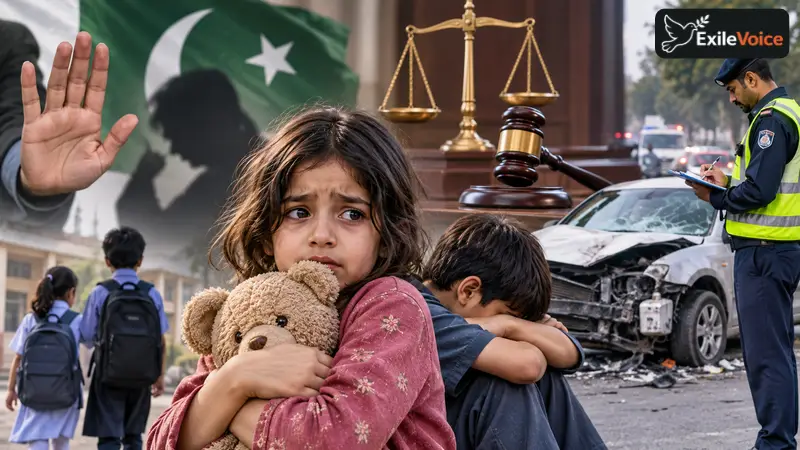
Recent tragedies involving vulnerable children and deadly road incidents have renewed urgent debate over child protection, law enforcement conduct, and unequal accountability in Pakistan. Occurring alongside international observances focused on children's rights, these events highlight deep gaps between legal commitments and everyday safety.
Cases of severe abuse and violence against minors underscore the vulnerability of domestic workers and children in positions of dependence. When incidents involve individuals connected to positions of authority, public concern intensifies over whether investigations proceed impartially and whether victims and their families receive timely justice. Strengthening child protection mechanisms requires consistent enforcement rather than reactive attention after tragedies occur.
Public anxiety also extends to how state security and law enforcement interact with young people and communities. Debates over school security checks, policing practices, and public messaging around children raise questions about proportionality, trust, and institutional standards. Ensuring that protective measures respect rights and avoid intimidation is essential for healthy civic life.
Deadly traffic collisions involving reckless or impaired driving further expose perceptions of a two-tier justice system. Fatal crashes in major urban centers prompt public outrage when citizens question whether influential individuals face the same legal consequences as ordinary motorists. Consistent traffic enforcement, forensic accountability, and impartial prosecution are key to deterring reckless behavior on public roads.
Addressing these overlapping challenges demands institutional reform across policing, prosecution, and social protection systems. Equal application of the law, regardless of status or affiliation, remains foundational to public safety and civic trust.