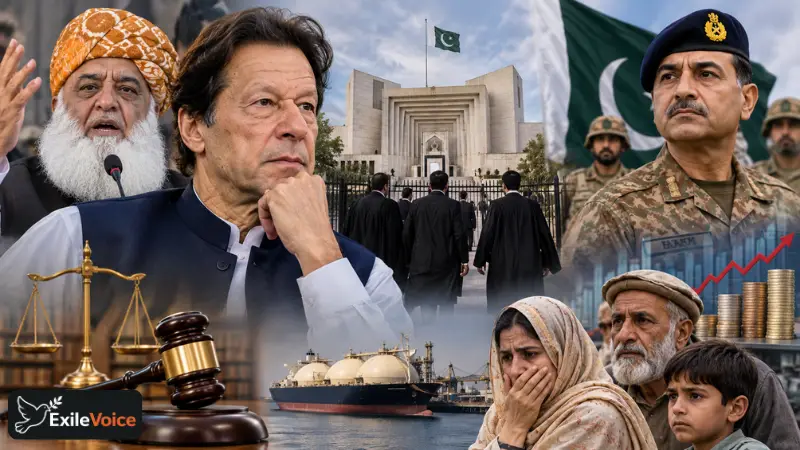
The political landscape of Pakistan is witnessing complex realignments and institutional confrontations, highlighted by recent legal proceedings, international diplomatic tensions, and shifting political discourses. In Peshawar High Court, petitions seeking the recovery of detained political figures, including prominent leaders and activists, have faced significant judicial inertia. Despite formal hearings, courts have repeatedly opted to defer decisions or pass the responsibility to larger benches, drawing criticism regarding the efficacy of institutional safeguards for fundamental rights. Observers note a concerning apathy within party ranks and legal communities regarding active mobilization for detained individuals, reflecting broader systemic pressures.
Concurrently, legal representation and high-level communications have adapted to restricted environments. Interactions between legal counsels and detained leaders have prioritized direct familial updates over public political messaging, serving to manage external communications while mitigating immediate legal and political fallout. Analysts suggest that these controlled interactions reflect a calculated balancing act between institutional oversight and the pressure exerted by international human rights discourse.
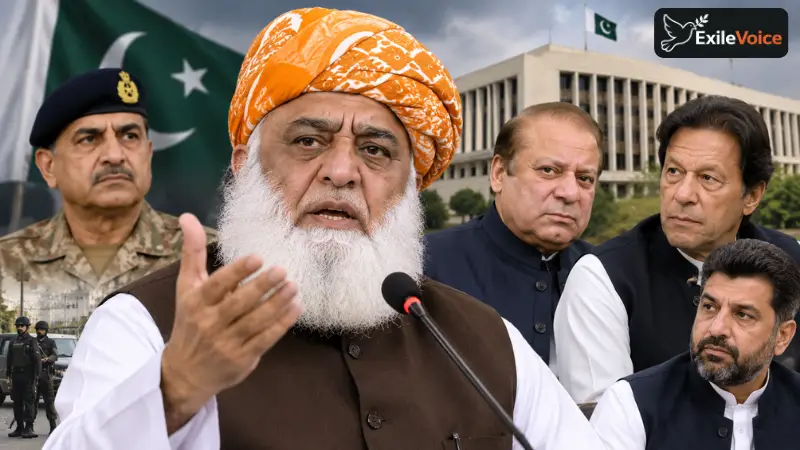
At the national level, the political discourse has increasingly centered on prominent opposition figures and their vocal critique of the military establishment. While various analysts interpret these escalations as fundamental fractures within the political-military equation, others argue that such confrontations often function within familiar parameters of political bargaining and tactical readjustments. Unlike movements driven by systemic accountability demands, transactional political maneuvers frequently utilize rhetorical pressure to negotiate political standing.
Furthermore, governance and security challenges continue to dominate regional affairs, particularly in Khyber Pakhtunkhwa. Recent statements from military spokespersons regarding regional security dynamics and administrative performance underscore ongoing friction between federal security imperatives and provincial governance structures. These tensions are compounded by broader macroeconomic pressures, including disruptions in vital energy supply chains such as Liquefied Natural Gas (LNG) cargo transit, which directly impact economic stability and public welfare.
Transparency and administrative accountability remain critical concerns, as evidenced by recent audit disclosures regarding social safety net programs. Reports highlighting irregularities in beneficiary databases and institutional scholarship allocations emphasize the urgent need for stringent oversight to protect marginalized populations from financial mismanagement. As political actors and institutions continue to navigate these multifaceted challenges, the trajectory of governance, institutional reform, and democratic accountability remains a pivotal subject of public discourse.