
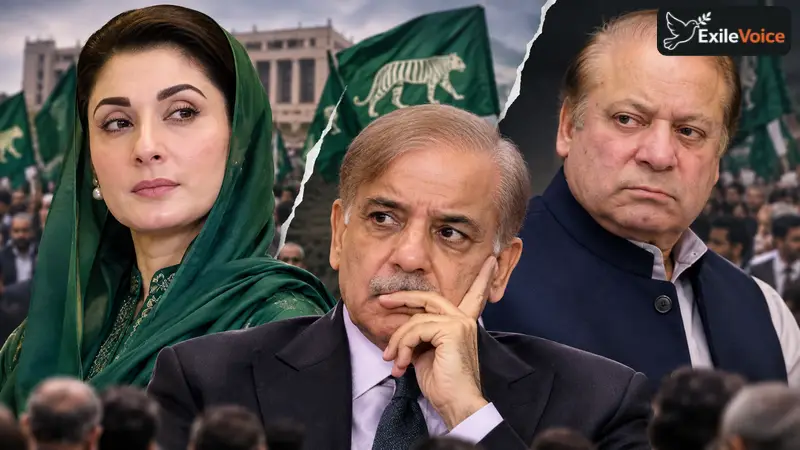
Pakistan's ruling party, the Pakistan Muslim League-Nawaz (PML-N), faces growing internal friction as questions mount over leadership roles, succession planning, and divergent policy stances within its ranks. Political observers and commentators in Islamabad and Lahore have pointed to debates surrounding whether Maryam Nawaz seeks to assume the party presidency, a move that could test long-standing hierarchies and reshape relations with Prime Minister and party president Shehbaz Sharif.
Historically, formal titles within the PML-N have often operated alongside informal centers of influence. While Nawaw Sharif holds the stature of party quaid and Shehbaz Sharif serves as party president and prime minister, Maryam Nawaz's prominent profile and operational reach as a key figure in party and provincial affairs have drawn close scrutiny. Rumors and commentary regarding a potential push for the party presidency highlight how ambitious political maneuvering can unsettle established balances, particularly when questions of political leverage and institutional backing enter the picture.
Responses from senior party figures illustrate the sensitivity of these dynamics. Rana Sanaullah pushed back against suggestions that Maryam Nawaz could eclipse Nawaz Sharif's standing in party decision-making, framing the notion around loyalty and legacy. Yet political analysts note that formal authority and practical influence do not always align neatly in Pakistani party politics, especially when generational ambitions intersect with shifting alliances and questions about who commands decisive access and support.
Another layer of tension involves succession and grooming within the Sharif family. Shehbaz Sharif has long sought to position his son, Hamza Shehbaz, as a prominent political figure, while analysts suggest Maryam Nawaz is consolidating her own authority and standing in Punjab and within the broader party structure. When competing political trajectories emerge inside a governing family, even routine administrative decisions or public appearances can take on heightened symbolic weight.
Fissures are also visible in how party leaders address contentious policy questions, including proposals related to new administrative provinces and referendums. Public remarks from figures such as Punjab Assembly speaker Malik Ahmad Khan supporting the idea of a referendum on new provinces contrast with more cautious or differently aligned postures elsewhere in the party and coalition. Meanwhile, shifting commentary from party spokespersons and ministers on sensitive political and security matters has underscored communication strain and inconsistent messaging.
For the PML-N, managing internal cohesion while governing is a delicate test. Whether tensions over party leadership, family succession, and regional policy remain contained behind closed doors or spill into open realignment will shape both the party's organizational future and the stability of the ruling coalition.