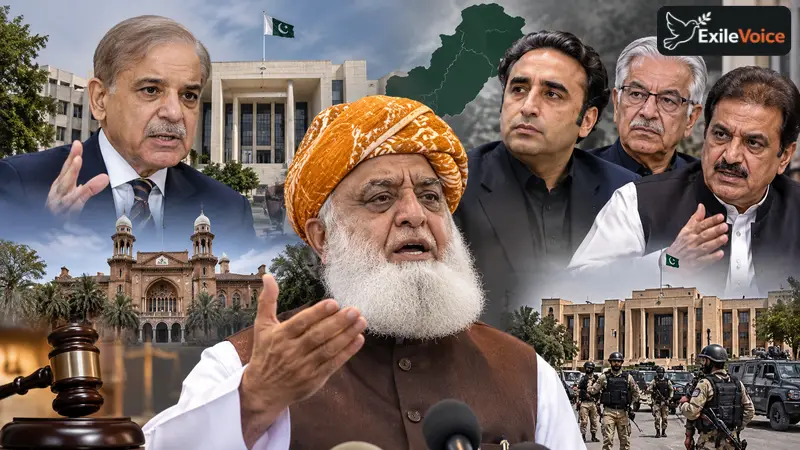

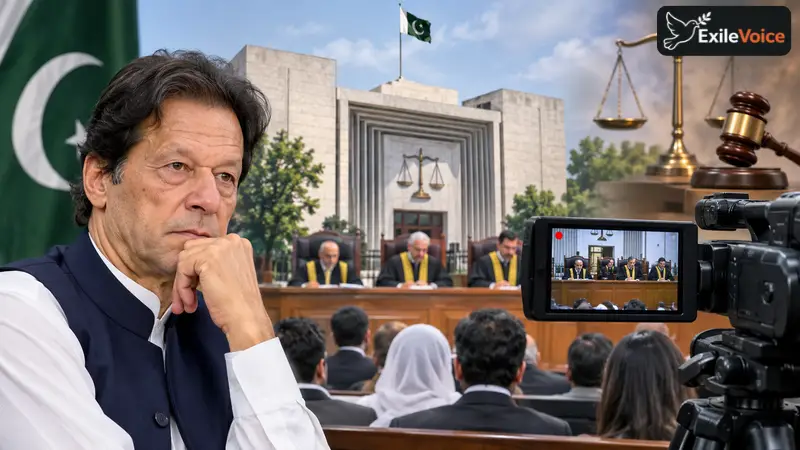
Debate over open justice and judicial transparency in Pakistan has intensified amid proceedings in the Islamabad High Court concerning the Al-Qadir Trust case involving Imran Khan. Defense lawyers have sought live streaming of court hearings, arguing that public access allows citizens to follow legal arguments directly and judge proceedings on their merits rather than through secondhand accounts.
The push for live broadcasts sits at the intersection of constitutional principles, public trust, and procedural discretion. Supporters of live streaming contend that airing high-profile hearings promotes accountability and curbs speculation in politically charged cases. In past instances, select proceedings in Pakistan's superior courts have been broadcast or streamed, prompting recurring arguments that transparency should be applied consistently when public interest is high.
In the Islamabad High Court proceedings on the Al-Qadir Trust matter, however, the bench declined the request for live streaming. Judges indicated that earlier requests had already been addressed and noted that formal rules or comprehensive policies governing live streaming in the high court were not yet in place. That stance drew pushback from counsel, who pointed to prior instances where live broadcasts had been permitted in specific proceedings, highlighting inconsistencies in how transparency standards are applied across benches and cases.
At the heart of the political and legal controversy is the substance of the Al-Qadir Trust case itself. Critics and supporters of Imran Khan argue that the prosecution rests on flawed premises regarding funds linked to a settlement process involving Malik Riazz and funds routed through Supreme Court accounts, maintaining that Imran Khan derived no personal financial benefit from the trust. Opponents and prosecutors view the matter through the lens of accountability and legal liability, ensuring that every procedural ruling carries sharp political resonance.
Beyond courtroom procedure, broader concerns about due process, access to detainees, and the enforcement of court orders continue to shape public perception of the justice system. Disputes over family visits and the practical implementation of judicial directives feed ongoing arguments over whether legal standards operate evenly across all litigants.
Ultimately, the debate over live streaming in the Al-Qadir Trust case reflects a deeper question about modernizing judicial openness in Pakistan. Clear, uniform rules on broadcasting proceedings could help reduce friction over selective access, even as substantive legal battles over conviction, appeal, and fairness remain fiercely contested.