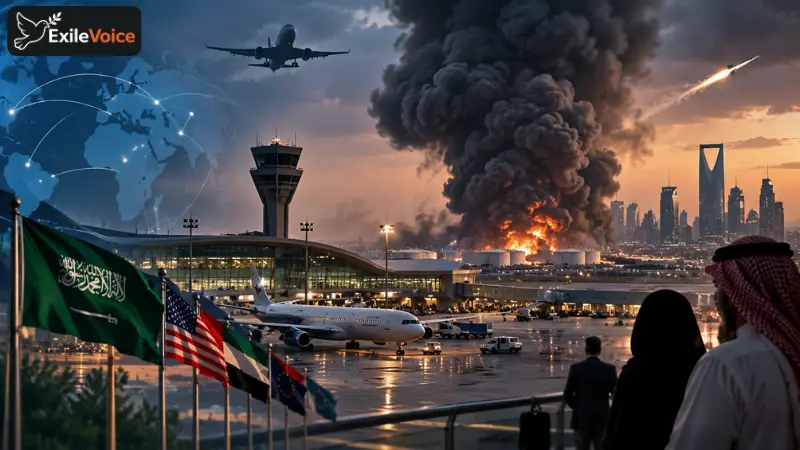
The geopolitical landscape of the Middle East has experienced severe escalation, marked by strategic attacks impacting global energy infrastructure. Recent developments in Yemen and the surrounding maritime choke points have introduced profound vulnerabilities for regional energy producers and international supply chains.
The strategic city of Mokha along the Red Sea coast, alongside critical nearby islands, has fallen under the control of Houthi forces. This development consolidates control over the Bab el-Mandeb strait, a vital maritime corridor connecting the Red Sea to the Gulf of Aden. With the Strait of Hormuz already heavily constrained due to ongoing regional tensions involving Iran, the disruption at Bab el-Mandeb places unprecedented pressure on global maritime traffic and petroleum transit.
In response to long-standing military threats in the Gulf, Saudi Arabia previously constructed the East-West pipeline to transport crude oil across the kingdom directly to the Red Sea, bypassing the Strait of Hormuz. However, this critical infrastructure suffered extensive strikes by Houthi forces. Satellite telemetry and imagery indicate that fires span a length of 80 to 100 kilometers along the pipeline route, suggesting severe structural damage that could require months or even a year of intensive repair work.
This incident compounds existing pressures on Saudi oil production, which is reportedly hovering near historic lows since the 1990s. The sudden withdrawal of significant production capacity from the global market has driven oil prices upward, with futures reacting sharply amidst concerns over prolonged supply deficits. International energy analysts note that these combined disruptions underscore the extreme fragility of critical energy transport networks in conflict zones, requiring urgent diplomatic and strategic reassessments by regional governments and international allies.