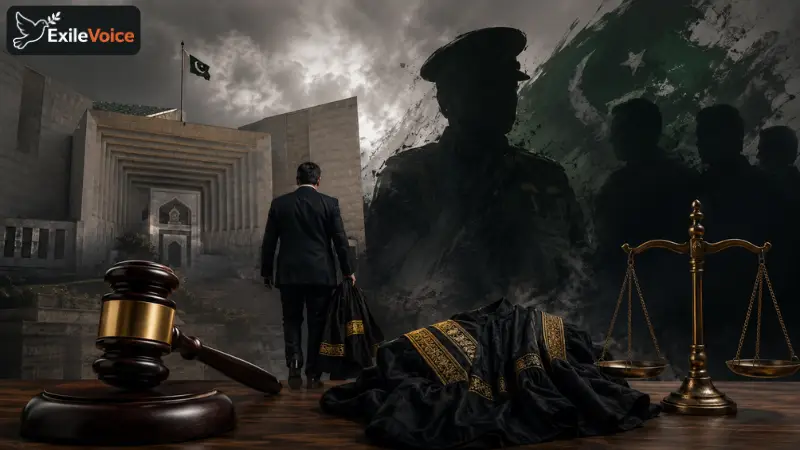
The current political and constitutional climate in Pakistan is facing a severe institutional crisis, highlighted by a growing number of resignations within the superior judiciary. The resignation of Lahore High Court Justice Rahil Kamran Sheikh marks a significant event in this ongoing struggle, bringing the total number of high-profile judicial resignations to seven across the Supreme Court and Lahore High Court over recent years. Legal scholars and political commentators view these departures as an act of defiance against systemic pressure and executive overreach.
Critics and analysts argue that the judiciary has been systematically weakened through legislative amendments and administrative changes designed to curtail its independence. Justices who stepped down, including former prominent figures such as Justice Shahid Jamil Khan, Justice Chaudhry Abdul Aziz, and Justice Shams Mahmood Mirza, had previously sought to deliver judgments upholding fundamental rights, public interest, and constitutional governance. Their exits are widely interpreted as a form of protest against executive dominance and the influence of military leadership in civilian administrative affairs.
The implications of these resignations extend far beyond the courtroom. They reflect a deepening friction between the organs of the state, where the legal community continues to advocate for the supremacy of the constitution, while various political and military actors consolidate institutional control. Observers note that the lack of internal dissent within the military ranks contrasts sharply with the public stances taken by members of the superior judiciary, emphasizing the profound polarization within Pakistan's governance framework. As civil society and legal practitioners monitor these developments, the future of judicial independence remains a critical point of contention in the country's political evolution.