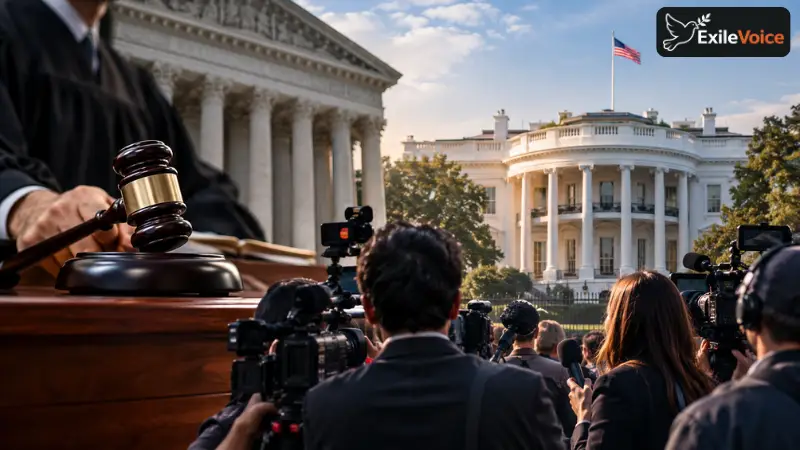
In a decisive late night legal ruling, a U.S. Federal District Court issued a temporary restraining order halting the White House's attempts to revoke credentials for key mainstream media outlets. The legal controversy began when executive staff ordered the suspension of press credentials for journalists representing CNN, MSNBC, and Politico following contentious press briefings. Administration officials defended the revocation as a measure to curb perceived misinformation. However, major news networks responded by launching a coordinated boycotting strategy, refusing to cover non-essential executive press briefings, and promptly filing a federal lawsuit alleging First Amendment violations and procedural due process arbitrary actions.
Federal Judge Kelly presided over the emergency injunction hearings, issuing a ruling past midnight that immediately reinstated full press access for the affected journalists and media outlets. The ruling emphasized that the executive branch, while exercising administrative oversight within the White House, cannot unilaterally bar accredited press organizations without adhering to due process. The court noted that revoking access on an arbitrary basis without granting targeted reporters a fair hearing violates constitutional protections guaranteeing freedom of the press. This unexpected judicial setback occurred at a highly sensitive geopolitical moment for the executive administration. The stay order was rendered just hours before scheduled high-level bilateral summits at the White House with visiting international heads of state, including Chinese President Xi Jinping. Protocol surrounding state visits demands meticulous public relations management, yet the ongoing courtroom clash and media boycott eclipsed much of the initial foreign policy narrative. Analysts noted the stark contrast between official diplomatic ceremonies, including elaborate airport receptions and state honors, and the domestic constitutional disputes unfolding simultaneously in federal court.
Beyond the immediate administrative inconvenience, the ruling underscores the robust nature of judicial independence within American democratic governance. The decision serves as a pivotal precedent regarding access rights for press corps members, reinforcing that access to public government buildings cannot be conditioned on political alignment or unilateral executive decree. Media freedom organizations lauded the decision as a essential victory for public transparency and constitutional accountability, while legal experts anticipate further appeals as the underlying lawsuit moves toward a comprehensive merits hearing.