

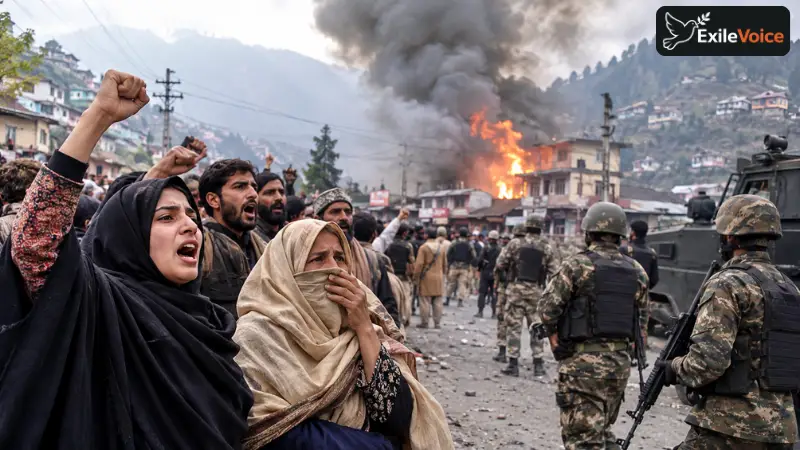
The situation in Azad Kashmir, specifically around Rawalakot, has escalated significantly following security operations launched by joint forces comprising military, rangers, and police personnel. For approximately eight to nine months, local citizens, including women and men, had maintained a peaceful sit-in protest near the central bus station to advocate for the demands put forward by the Jammu Kashmir Joint Awami Action Committee. Tensions boiled over when security forces initiated a sudden and heavy-handed crackdown on the demonstrators.
According to local reports and international coverage by outlets such as the BBC, the operation involved heavy weaponry and drone strikes. Reports from the ground indicate that residential areas near the bus terminal were heavily impacted, with at least one home catching fire after being struck during the operation. Local leaders and committee members have raised serious concerns over mounting casualties, though official confirmation regarding exact figures remains unverified due to the ongoing volatile environment and restricted access to immediate medical transport.
Law enforcement representatives stated that the operation aimed to clear the area around the bus terminal, which had been occupied by protesters for months. While authorities reported a sustained exchange of fire lasting for hours, accounts from local observers emphasize the severe disparity in firepower between armed security personnel and the civilian demonstrators. The incident has drawn widespread attention from overseas communities and regional stakeholders, heightening political friction and public outcry regarding state response mechanisms in the region.