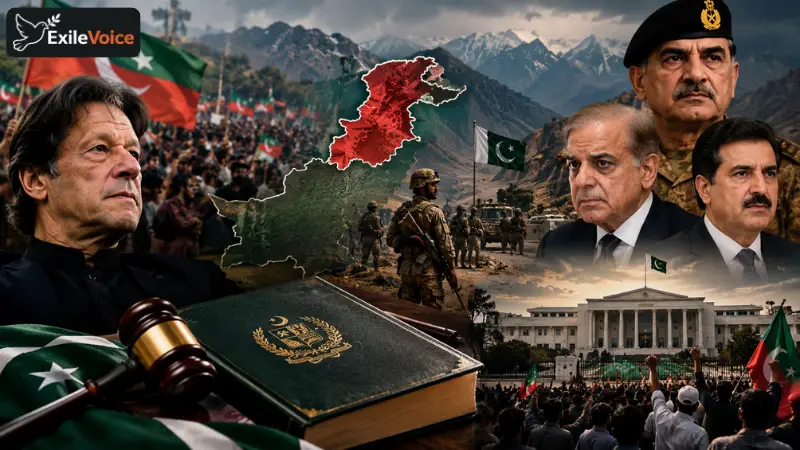
The political landscape of Pakistan has entered a perilous new phase following the invocation of emergency rule and Articles 232 and 234 in the strategic province of Khyber Pakhtunkhwa (KP). This decisive maneuver effectively suspends the provincial government led by Pakistan Tehreek-e-Insaf (PTI), the political stronghold of imprisoned former Prime Minister Imran Khan. The decision, executed by President Asif Ali Zardari upon the advice of Prime Minister Shehbaz Sharif, places Governor Faisal Karim Kundi and an eleven-member advisory council at the helm of the province. For critics, opposition leaders, and legal scholars, this intervention represents an aggressive escalation of the civil-military friction that has defined Pakistani politics for decades.
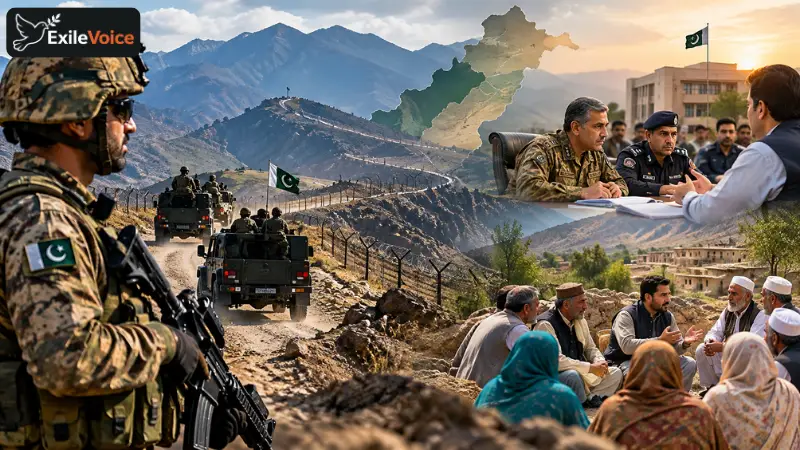
At its core, the imposition of emergency rule in Khyber Pakhtunkhwa is viewed by PTI loyalists as a calculated coup against the last major democratic bastion remaining outside the direct control of the ruling federal coalition and the military establishment. Khyber Pakhtunkhwa shares a volatile, porous border with Afghanistan and has historically served as the epicenter of regional security challenges, militancy, and anti-establishment political sentiment. By dismantling the elected provincial apparatus under the guise of security maintenance and counterterrorism imperatives, the federal government and military leadership under Field Marshal Asim Munir have centralized authority. This move has triggered widespread protests, mass detentions of PTI leaders, and fierce accusations that constitutional provisions are being weaponized for partisan political control.
The timing of this constitutional crisis is particularly explosive. The emergency decree followed intense demonstrations and marches organized by PTI supporters demanding the release of Imran Khan, improved prison conditions, and immediate legal remedies for jailed party members. Rather than engaging in political dialogue, the state apparatus deployed sweeping detentions, invoking emergency powers to curtail freedom of assembly and silence dissent. Legal experts point out that while Articles 232 and 234 provide constitutional mechanisms for managing extreme security emergencies, applying them to overthrow an established provincial government sets a dangerous precedent. It blurs the line between legitimate counterterrorism operations and authoritarian suppression of democratic opposition.
Furthermore, the economic and social ramifications of this political instability cannot be overstated. Investors and international partners view Pakistan with increasing caution as political polarization deepens. The concentration of power in executive and military hands risks alienating millions of voters in Khyber Pakhtunkhwa who feel disenfranchised by the removal of their elected representatives. As Governor Faisal Karim Kundi assumes administrative control backed by an advisory council, the fundamental question remains whether this authoritarian consolidation will pacify the region or ignite a broader, uncontrollable wave of civil unrest. The unfolding situation in Khyber Pakhtunkhwa serves as a critical barometer for the future of constitutional governance and democratic resilience in South Asia.