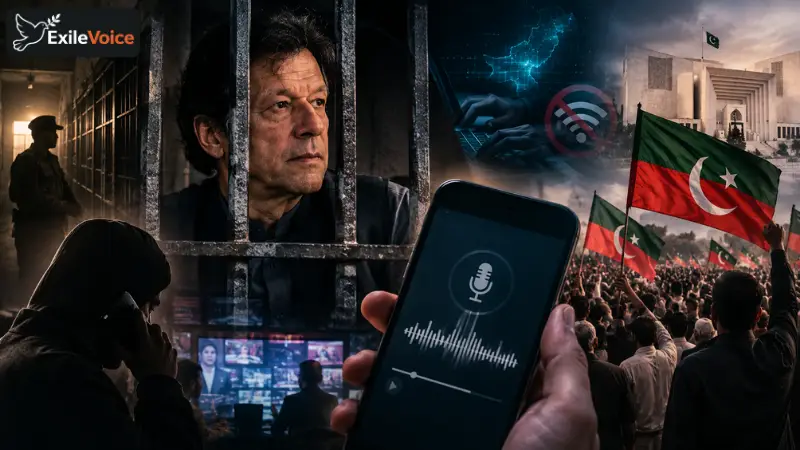
Recent commentary and digital logs circulating across Pakistani political channels have brought intense public focus toward alleged communications emerging from high-profile prison cells. Observers, political analysts, and supporters of the Pakistan Tehreek-e-Insaf (PTI) party have scrutinized unverified audio-visual snippets and messages reportedly smuggled or conveyed from incarcerated figures. These alleged communiques frequently touch upon deep-seated anxieties regarding administrative overreach, judicial constraints, and the treatment of political detainees held in high-security facilities.
The core of these reports involves claims that despite strict isolation protocols, key political figures maintain informal communication channels to coordinate resistance narratives. Commentators analyzing these developments emphasize the profound psychological and strategic dimensions of prison messaging in modern political warfare. When a prominent leader communicates from confinement, it transforms the prison cell from a place of political silencing into a potent symbol of resistance. This phenomenon places immense pressure on state apparatuses, forcing them to constantly recalibrate their censorship and detention strategies.
Furthermore, these leaks trigger a cascading effect across mainstream media and digital platforms. Independent analysts point out that state responses, ranging from internet throttling to outright denials, often amplify the very messages they seek to suppress. As political polarization deepens, the authenticity of these messages becomes secondary to their symbolic impact. Supporters rally around the narrative of unbroken morale, while opponents dismiss the leaks as manufactured propaganda designed to incite public unrest. Ultimately, the discourse surrounding jailhouse communications highlights the fragile state of civil liberties, freedom of expression, and the ongoing tug-of-war between the ruling establishment and opposition forces in Pakistan.