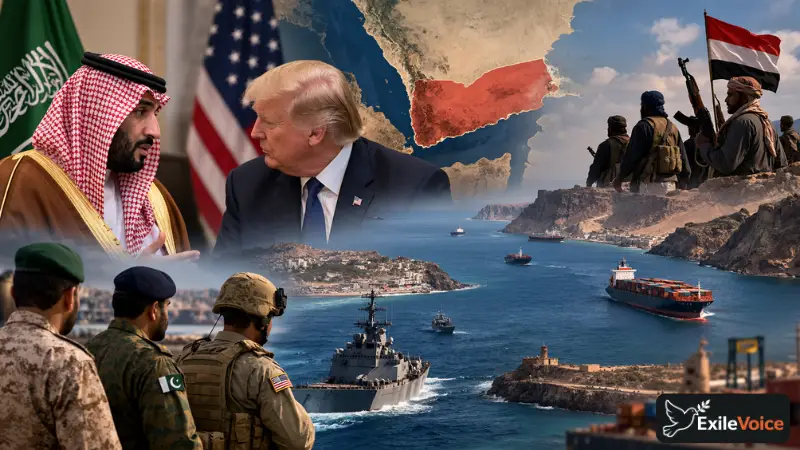
The geopolitical landscape in the Middle East has experienced a critical shift as the conflict in Yemen intensifies, placing immense pressure on regional powers. Reports indicate that Saudi Arabia's Crown Prince Mohammed bin Salman engaged in high-level diplomatic outreach with U.S. leadership, seeking direct military intervention against Houthi forces as the situation around strategic maritime locations deteriorated. The Houthi advance toward vital coastal infrastructure, particularly the port city of Mocha and surrounding areas near the Bab el-Mandeb strait, has raised alarms regarding global trade routes.
Despite urgent appeals from Riyadh, the United States declined to commit direct combat troops to a new military front, emphasizing its primary focus on containment strategies regarding Iran and the security of the Strait of Hormuz. Similarly, diplomatic and defense channels involving Pakistan have maintained a strict boundary, confirming that bilateral agreements remain centered on logistical support and training rather than active combat deployment in Yemen. This convergence of non-intervention decisions leaves Saudi Arabia navigating a complex security matrix with limited direct foreign military backing.
Concurrently, Houthi forces have consolidated control over key coastal strips along the Red Sea, securing strategic positions and maritime choke points that carry roughly twelve percent of global trade. Military commanders within the Houthi leadership have asserted dominance over regional transit corridors, effectively restricting unauthorized maritime navigation through the southern gateway. In response to these developments, diplomatic communications between Saudi and Iranian foreign ministers have highlighted the urgent need to address the underlying drivers of the conflict, particularly as economic pressures and maritime blockades continue to strain regional stability. Analysts note that sustainable de-escalation in Yemen remains intrinsically linked to broader geopolitical accommodations concerning trade access and security frameworks in the Gulf.