

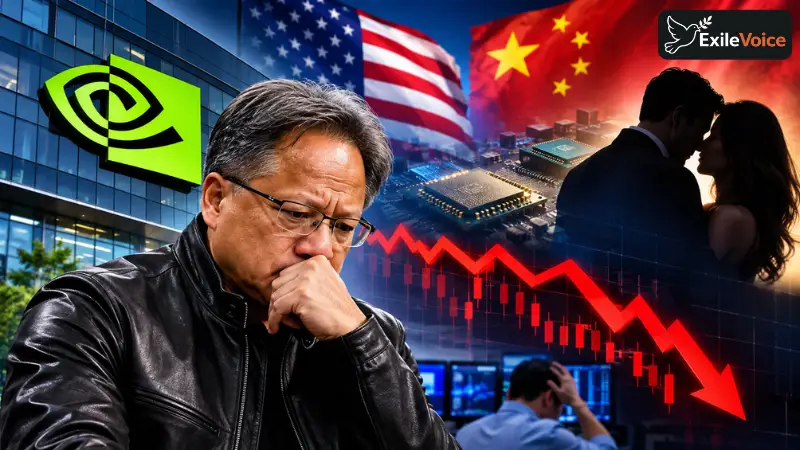
The global technology sector experienced a staggering economic and geopolitical tremor following explosive allegations involving a high-profile executive romance linked to a prominent overseas tech supplier. Nvidia, widely recognized as a titan in the artificial intelligence landscape and a cornerstone of modern technological advancement, faced an unprecedented financial contraction as reports surfaced regarding its top leadership. The controversy erupted when questions arose surrounding interactions between the company's senior leadership and an executive associated with Mega Speed, a Singapore-registered entity involved in significant semiconductor procurement.
Amid strict export controls imposed by the United States to safeguard critical national security assets and restrict advanced artificial intelligence hardware from reaching Chinese entities, the situation quickly escalated beyond corporate governance. Analysts and regulatory bodies, including the Federal Bureau of Investigation, began examining potential compliance breaches and the intricate corporate structures shielding the ultimate beneficiaries of these transactions. Observers noted that billions of dollars in commercial engagements lacked transparent ultimate ownership trails, fueling widespread speculation regarding intelligence operations and economic espionage within the semiconductor supply chain.
The financial fallout was immediate and severe. In a single trading session, Nvidia experienced a market capitalization loss exceeding two hundred billion dollars, illustrating the immense volatility and geopolitical sensitivity tied to semiconductor manufacturing. Despite efforts by administration officials to stabilize market confidence and downplay potential security compromises, the incident underscored the ruthless nature of the ongoing technological supremacy race between global superpowers. As investigations continue, the episode serves as a stark reminder of how deeply intertwined corporate governance, international trade restrictions, and national security have become in the digital age.