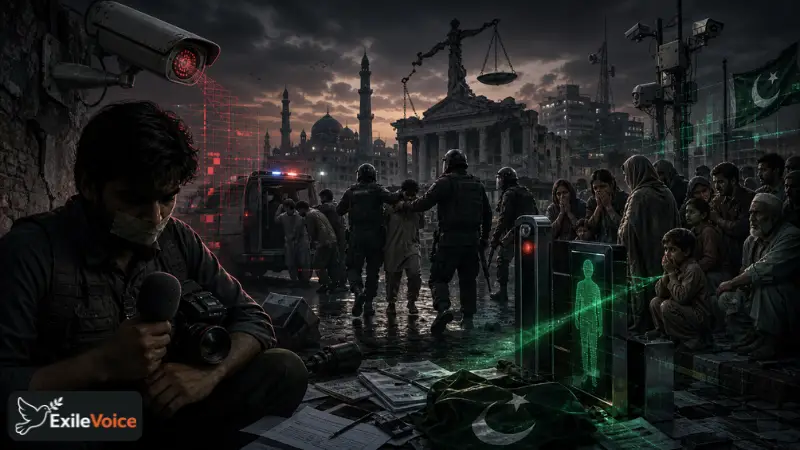
As the world observes International Press Freedom Day, the media landscape in Pakistan serves as a cautionary tale of systemic erosion. Journalist Wajahat S. Khan points out that "Press Freedom" is a hollow concept in an environment where the press itself is being dismantled through abductions, intimidation, and sophisticated technological surveillance. The introduction of new "Firewalls" and surveillance technology at major hubs like Islamabad Airport, funded by international interests, signals a future where the privacy of the Pakistani citizen is a thing of the past. The state is no longer just monitoring dissent; it is proactively engineering a silent society.
The culture of "Dark Justice" has become the new normal. Reports of extrajudicial encounters in Punjab, where over a thousand individuals have been killed recently, highlight a breakdown of the judicial process. While the crimes involved, such as child abuse, are heinous and deserve the highest punishment, the shift from courtroom trials to "Police Encounters" marks the end of the rule of law. When the police and paramilitary forces like the Rangers take on the roles of judge, jury, and executioner, the result is a climate of fear that permeates every level of society.
Perhaps the most tragic element of this situation is the perceived resilience, or exhaustion, of the Pakistani public. Khan observes that the modern Pakistani has become so accustomed to "Chadar and Char-Diwari" violations (sanctity of the home), raids, and the abduction of loved ones that they have developed a superhuman level of patience. This patience, however, is often mistaken for consent by the ruling elite. The contrast between the "Daring" ancestors who founded the country out of fear of future persecution and the current generation that quietly endures actual persecution is a bitter irony. As the nation celebrates events like the PSL to distract from these realities, the underlying structural violence continues to decimate the social contract.