

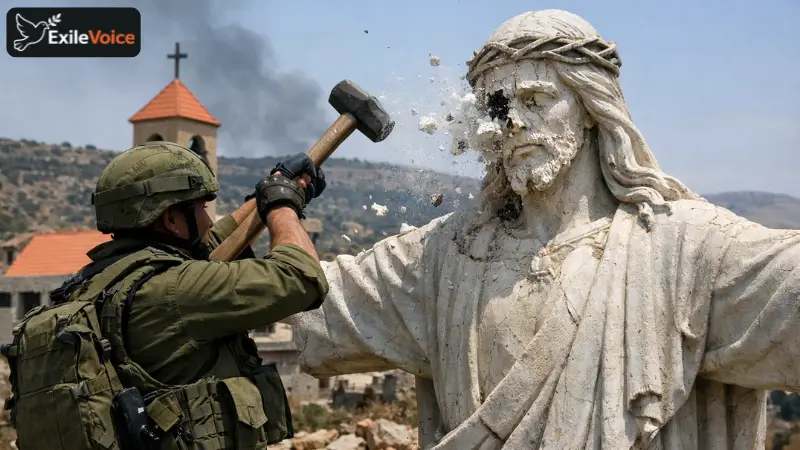
Amidst the broader geopolitical tensions of the Middle Eastern conflict, a specific incident in Southern Lebanon has sparked international outcry and raised questions about the ethics of military conduct. An image recently circulated on social media shows an Israeli soldier in the Christian village of Debel using a sledgehammer to vandalize a statue of Jesus. This act of religious desecration, occurring in the heat of a conflict that has already displaced thousands and disrupted global commerce, has drawn condemnation from various religious and political leaders.
In a notable departure from typical military defensive posturing, the Israeli military confirmed the authenticity of the photograph and announced an immediate investigation. Prime Minister Benjamin Netanyahu expressed regret for any offense caused to believers worldwide. This transparency stands in contrast to other regional military organizations, which often dismiss such evidence as propaganda or AI-generated fabrications. The admission that the soldier belonged to the military represents a level of ethical accountability that is rarely seen in active combat zones.
However, the incident raises a larger question about the psychological impact of prolonged warfare on individual soldiers. Investigations are expected to determine if the soldier's actions were a result of trauma, personal grievance, or systemic failures in military discipline. While the act itself is viewed as the work of an individual "fanatic," it reflects the high-pressure environment of a 50-day conflict that has destabilized energy markets in Japan, South Korea, and Bangladesh, and caused massive load-shedding in Pakistan.
This event also highlights the role of religious extremism in modern warfare. While global leaders like the Pope advocate for peace through diplomatic channels, online platforms are often filled with voices, some even from within the West, who use religious texts to justify continued aggression and the use of force. This digital "fanaticism" often runs counter to official diplomatic efforts, creating a fragmented reality where symbols of faith are used both as tools for peace and as targets of hate. The incident in Lebanon serves as a grim reminder that in the shadow of grand strategy, the human element of conflict remains the most volatile variable.

