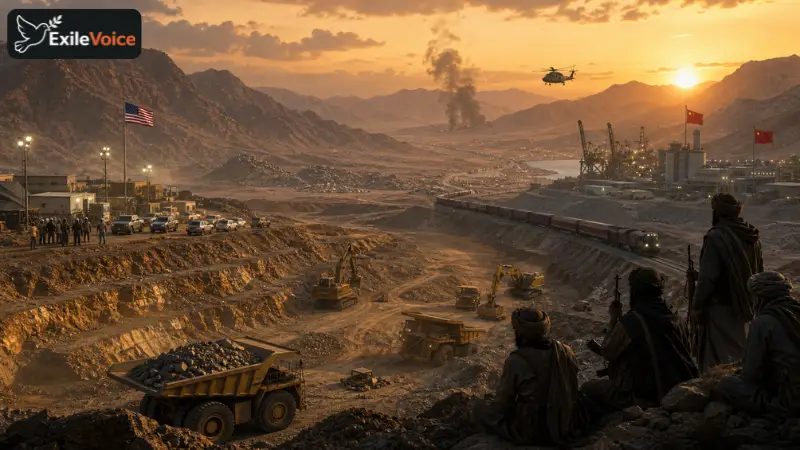
The geopolitical landscape of Pakistan's Balochistan province is undergoing a tectonic shift as American and Chinese economic interests find themselves in unprecedented proximity. Historically, Balochistan has been the cornerstone of China’s Belt and Road Initiative (BRI) through the CPEC project. However, recent developments indicate a growing American footprint in the region’s lucrative mining sector, specifically within the Reko Diq copper and gold mines.
Reports from global outlets like the New York Times highlight a significant $1 billion investment from the US Export-Import Bank. This funding supports Barrick Gold, a Canadian giant, in acquiring American-made equipment for operations in Reko Diq. This creates a fascinating and potentially volatile dynamic: American-backed mining operations are now situated nearly adjacent to Chinese-run projects like the Saindak copper-gold mine.
This convergence of global superpowers occurs against a backdrop of intensifying local insurgency. The Balochistan Liberation Army (BLA) has historically targeted Chinese interests with lethal precision, viewing them as colonial exploiters. Interestingly, while the BLA remains wary of American "imperial" presence, their tactical approach toward US interests has differed, perhaps due to the West's dominance in global narrative-shaping. However, as the US deepens its involvement, the risk of these insurgent groups shifting their focus toward American assets remains a primary concern for the Trump administration.
The resilience of Pakistan’s infrastructure, such as the Jaffar Express, which continues to operate despite numerous attacks, serves as a testament to the complex environment in which these global powers are vying for influence. The strategic "facilitation" of international media to these remote areas suggests that the Pakistani establishment may be attempting to balance these competing interests to secure regional stability and economic growth.