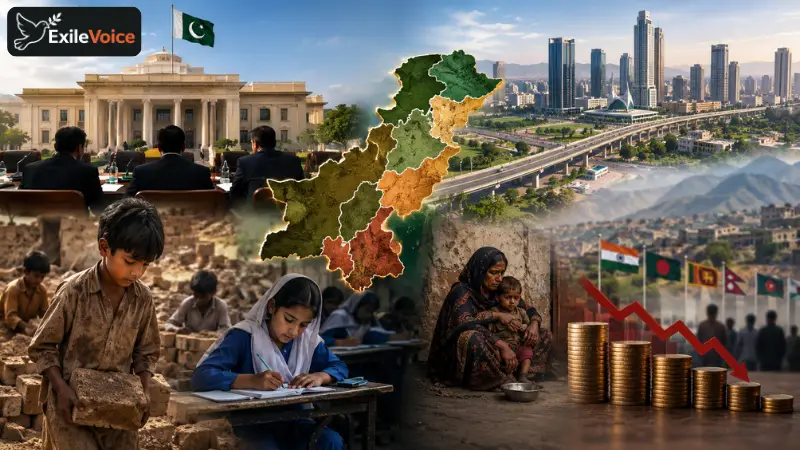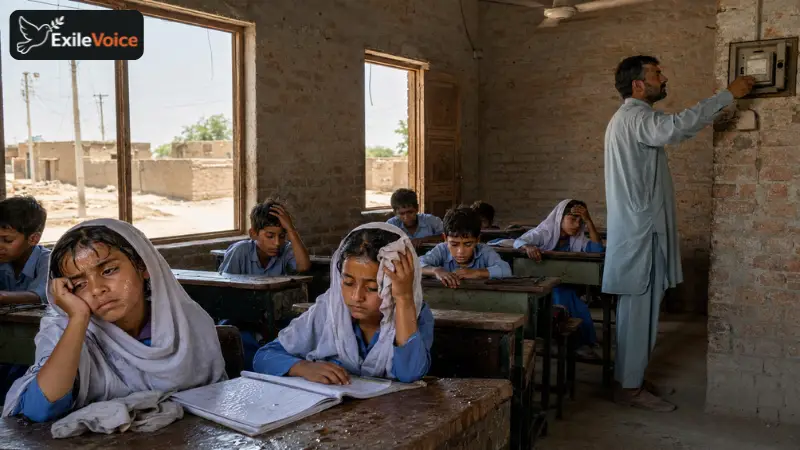
The deep fracture between public expenditure and ground-level reality in Pakistan has reached a critical juncture, directly impacting the country's most vulnerable demographic: its children. In the rural outskirts between Faisalabad and Chiniot, deep within the agricultural heartland designated by historical canal irrigation networks, lies the village of Looniawala (131 JB). Here, the Government Primary School stands as a harrowing testament to how the country’s current macroeconomic management and unprecedented energy inflation are disrupting basic state infrastructure.
Amidst a severe heatwave, primary school classrooms are operating under a state-enforced blackout. In these brick-and-mortar structures, cooling fans remain completely shut off during peak daylight hours. Investigative footage reveals that school administrators have proactively disconnected power distribution lines and pulled circuit breakers to prevent the accumulation of electricity bills that the school’s micro-budget cannot sustain. Young, covered female students and small children sit in stagnant, sweltering rooms, their uniforms soaked in sweat, facing a choice between academic enrollment and basic physiological endurance. When questioned, the children repeat the institutional directive given to them: "The electricity bills are too high, so the fans must remain off."
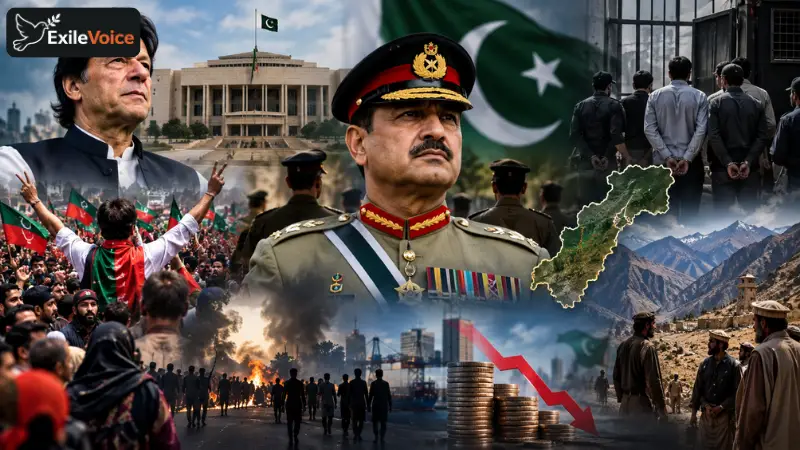
This local crisis reflects a wider national dilemma. The spiraling cost of independent power production, state circular debt, and the heavy taxation embedded into utility tariffs have made electricity unaffordable for public-sector institutions. While administrative staff enforce absolute compliance inside the classroom, political leadership appears disconnected from this reality. In a recent legislative debate, former lawmaker Mustafa Nawaz Khokhar challenged the state’s current tariff structures, highlighting that ordinary citizens and local institutions are collapsing under the financial weight of their utility obligations. In response, senior political figures, such as former Interior Minister Rana Sanaullah, dismissed these systemic concerns on national television. This ongoing political dismissal underscores a deepening gap between institutional policymakers and the communities they govern.
The human cost of this economic squeeze extends beyond infrastructure failure. While rural schools operate without electricity, public resources are visibly directed toward extensive state protocols. A case in point is the massive security convoy accompanying Lahore Police Chief Bilal Saddique Kamyana during a standard appearance at the Lahore High Court. The multi-vehicle motorcade and dozens of security personnel starkly contrast with the absolute lack of basic climate mitigation provided to local schools.
Compounding these institutional challenges is a growing controversy surrounding curriculum changes within the Punjab textbook board. While schools struggle to afford basic utilities, updated educational materials feature extensive biographical inserts celebrating political dynasties. New historical timelines place controversial political figures alongside established historical women who have held public office. This combination of structural neglect and political messaging raises significant concerns among academic experts regarding the foundational priorities of the state's public education infrastructure.