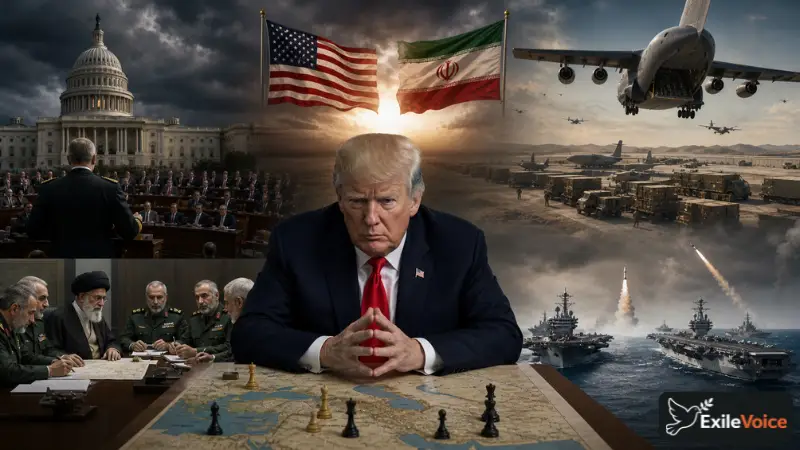
The geopolitical landscape of the Middle East is currently defined by a high-stakes game of chicken between Washington and Tehran. Despite rumors of a formal ceasefire, the reality on the ground is far more volatile. President Donald Trump has recently engaged in a sophisticated legal maneuver with the U.S. Congress, asserting that "hostilities have terminated" in a bid to bypass the War Powers Resolution Act of 1973. This act limits a president's ability to conduct military operations without congressional approval beyond 60 days. By claiming a cessation of active war, Trump is essentially attempting to "reset the clock," preserving his ability to launch future strikes without seeking a formal mandate from a wary legislature.
This legal posturing masks a deeper strategic deadlock. Iran has reportedly offered a second proposal for a ceasefire, transmitted through Pakistani mediators. The new Iranian offer shows increased flexibility, particularly regarding the sequencing of steps, offering to open the Strait of Hormuz before the lifting of the U.S. naval blockade. However, the Trump administration has summarily rejected these overtures. The sticking point is not merely nuclear proliferation, as is often cited in official briefings, but rather a clash of political survival and optics.
Trump’s electoral base expects a "grand bargain" or a total capitulation that he can market as a historic victory. Conversely, the Iranian regime is facing an existential threat that is more economic than military. While the U.S. and Israel have successfully degraded Iran’s physical infrastructure and navy, the true danger to the Islamic Revolutionary regime lies in the lack of financial relief. If a deal is struck that ends the war but leaves the crushing sanctions and naval blockades intact, the internal political pressure within Iran could become unsustainable. A regime can survive many things, but it cannot survive a total inability to provide basic economic stability to its population following a devastating conflict.
Meanwhile, military movements suggest that the "end of hostilities" is a misnomer. Reports of a massive U.S. airlift toward regional hubs like the Al Dhafra Air Base in the UAE indicate a rapid logistical push. Heavy-lift aircraft are reportedly moving thousands of tons of weaponry into the region, signaling that the U.S. is preparing for "eminent" strikes should negotiations continue to fail. The deployment of hypersonic missiles and the presence of three carrier strike groups in the Persian Gulf underscore the reality: we are not in a period of peace, but in a tactical pause where both sides are preparing for a potential "jailbreak" effort or a final, decisive confrontation.