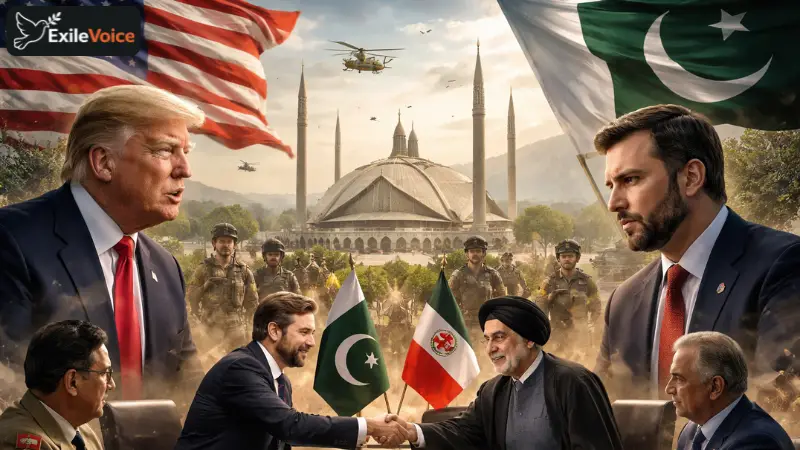
The landscape of Middle Eastern geopolitics is currently witnessing a tectonic shift as President Donald Trump signals a potential end to the 50-year-old enmity between the United States and the Islamic Republic of Iran. According to Dr. Trita Parsi, a leading expert on US-Iran relations, this move is not merely a tactical ceasefire but a strategic pivot that could redefine global power structures. The center of this diplomatic storm has unexpectedly moved to Islamabad, Pakistan, where Vice President JD Vance recently engaged in marathon 15-hour negotiations with Iranian officials.
For the first time in decades, the United States is treating Pakistan not just as a regional ally but as a pivotal facilitator and host for a peace accord that could conclude a disastrous 50-day hot war. Dr. Parsi highlights that while the U.S. traditionally pairs diplomacy with military threats, evidenced by the Secretary of War’s simultaneous readiness to strike, the actual appetite for escalation in Washington has vanished. Trump, having seen his presidency teeter on the edge of destruction due to the conflict, is now laser-focused on securing a legacy-defining "big deal."
However, the path to a formal peace treaty is fraught with internal and external resistance. Inside the Washington "Beltway," powerful lobbies are working overtime to sabotage the progress. Specifically, the Israeli government under Benjamin Netanyahu views a normalized, sanction-free Iran as a devastating strategic defeat. For decades, Israeli security doctrine has relied on the "periphery strategy," which evolved in the 1990s into a mission to keep the U.S. and Iran in a state of permanent hostility. A deal that lifts primary sanctions would allow Iran to realize its full economic potential, potentially making it a dominant regional power and a "fourth major power center" alongside the U.S., China, and Russia.
The role of Pakistan in this process cannot be overstated. After previous mediation efforts by Oman and Qatar were undermined by renewed hostilities, Pakistan stepped up to provide a stable platform for JD Vance’s negotiations. While Vance made a dramatic exit from Islamabad without a final announcement, Dr. Parsi suggests this was a psychological tactic to manage home audiences and ensure that President Trump could personally claim the spotlight for the final signature. The stakes are immense: a successful accord would not only end the war but also remove the primary justification for a permanent U.S. military presence in the Middle East, finally allowing Washington to execute its long-desired "pivot" away from the region.