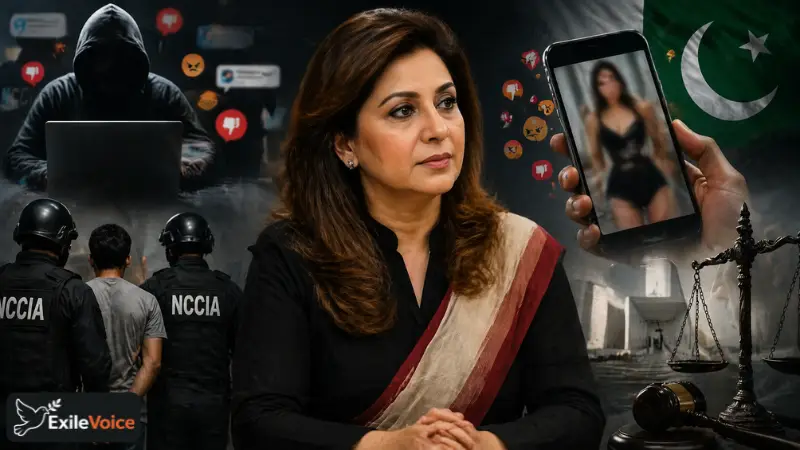
The intersection of digital media, public persona, and legal accountability in Pakistan has recently been ignited by the "photo leak" controversy involving television personality Gharida Farooqi. The incident, which involves the viral spread of images and subsequent legal action, has opened a broader debate on what constitutes "Gender-Based Digital Violence" versus public critique of a celebrity's choices. Farooqi has characterized the online backlash regarding her attire and appearance as an organized campaign of harassment, leading to several arrests by the NCCIA. This move has sparked intense discussion on the selective application of cybercrime laws, especially when contrasted with the state's treatment of political journalists.
Critics argue that while harassment is a serious issue, the use of "Gender-Based Violence" terminology in this context may be a strategic "woman card" to deflect from general public criticism. In the realm of public life, celebrities often trade a portion of their privacy for fame and influence; however, the Pakistani legal system is now being used to define the boundaries of that trade. The controversy is further complicated by Farooqi’s own past, including allegations regarding the mistreatment of a minor domestic worker, which many netizens have brought up to question the moral high ground taken in the current legal battle.
Simultaneously, the broader geopolitical theater continues to shift. While domestic media is occupied with celebrity legal battles, international relations are in a state of flux. Reports regarding the health of Iran’s Supreme Leader and the strategic movements of the Iranian Foreign Minister, Abbas Araghchi, suggest a complex regional maneuvering. While some state-aligned journalists in Pakistan initially framed the Foreign Minister's visit as a mediation effort for regional conflicts, international sources like Al Jazeera suggest a more bilateral focus on trade and security. This discrepancy highlights the role of "narrative building" in Pakistani media, where certain outlets are often accused of spreading "fake news" or "planted stories" to serve specific diplomatic optics. As Pakistan navigates these internal and external pressures, the role of the journalist, whether as a celebrity or a reporter, remains under intense scrutiny.