Within the hallowed halls of military academies and mess halls, there is an unspoken curriculum that often supersedes tactical training: the culture of absolute obedience. A recurring theme in the analysis of the Pakistan Army’s internal friction is the transformation of leadership from a pursuit of "Character and Competence" to a rigid adherence to the "Yes Sir" doctrine. This cultural phenomenon is central to understanding why the military often finds itself at odds with the democratic aspirations of the civilian population.
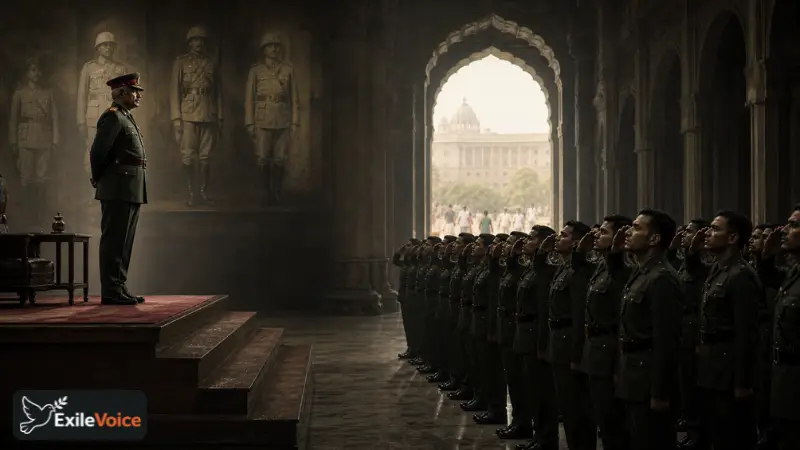
Professional insights into this culture reveal a system where dissent is equated with disloyalty. In a notable cultural reference, even military-backed media portrayals have highlighted this tension, where a young officer’s focus on "combat-ship and courage" is mocked by seniors in favor of a simpler four-step ladder: "Yes Sir," "Right Sir," "Okay Sir," and "Thank You Sir." While discipline is the backbone of any fighting force, the extension of this absolute hierarchy into the socio-political realm has significant consequences for national stability.
This rigid internal culture explains the military’s historical "jailer" approach to political figures. From the execution of Zulfikar Ali Bhutto to the ongoing incarceration of contemporary leaders, the institutional mindset often treats political deviation as a "mutiny" that must be quelled, much like the British handled the 1857 uprising. The "Yes Sir" culture ensures that the lower ranks and the officer corps remain a monolith, preventing the internal intellectual diversity required to navigate the complexities of a 21st-century democratic state.
Furthermore, this culture creates an "ecosystem of exclusion." When the leadership views itself as the sole heir to the "disciplined" colonial tradition, it naturally views the "undisciplined" civilian population as a group that needs to be managed rather than served. To evolve, the military must reconcile its internal requirement for discipline with an external requirement for democratic humility. Without this shift, the "Yes Sir" culture will continue to foster a leadership style that is efficient in the barracks but tone-deaf in the public square.