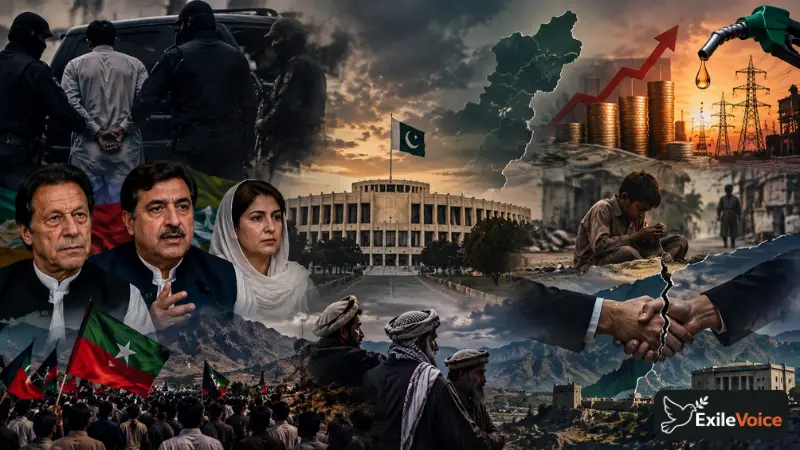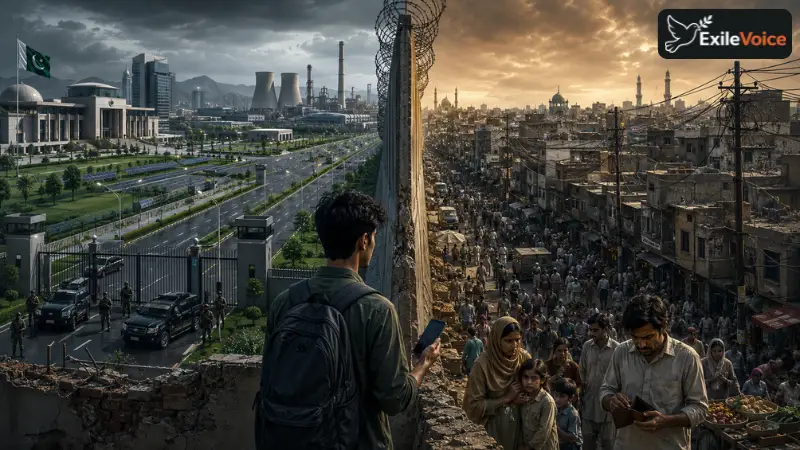
The concept of "Two Pakistans" has evolved from a metaphorical economic observation into a stark, systemic reality. In the current landscape, Pakistan appears to be operating as a bifurcated state: one segment belongs to the "Establishment", a secure, resource-rich, and legally insulated military-industrial complex, while the other encompasses the civilian populace, grappling with economic volatility, shrinking civil liberties, and legal precariousness.
This division is not merely about wealth; it is about the "protection of the law." Analysis suggests that the institutional Pakistan enjoys a separate set of rules, where accountability is internal and the state’s resources are prioritized for institutional continuity. Conversely, the "other" Pakistan faces the brunt of IMF-mandated austerity, high inflation, and an increasingly repressive environment for dissent. The video highlights that this gap has reached a breaking point, where the average citizen no longer sees the state’s interests as aligned with their own survival.
The narrative of "Two Pakistans" also touches upon the psychological detachment of the youth. With a median age of around 22, a vast majority of the population has no memory of the traditional political consensus. They view the state through the lens of digital connectivity and global standards, making the old "hybrid" model of governance appear obsolete. As the military continues to expand its footprint into the economic sector, from corporate farming to infrastructure, the distinction between the "defenders" and the "administrators" blurs, leading to a crisis of legitimacy that defines the modern Pakistani struggle.